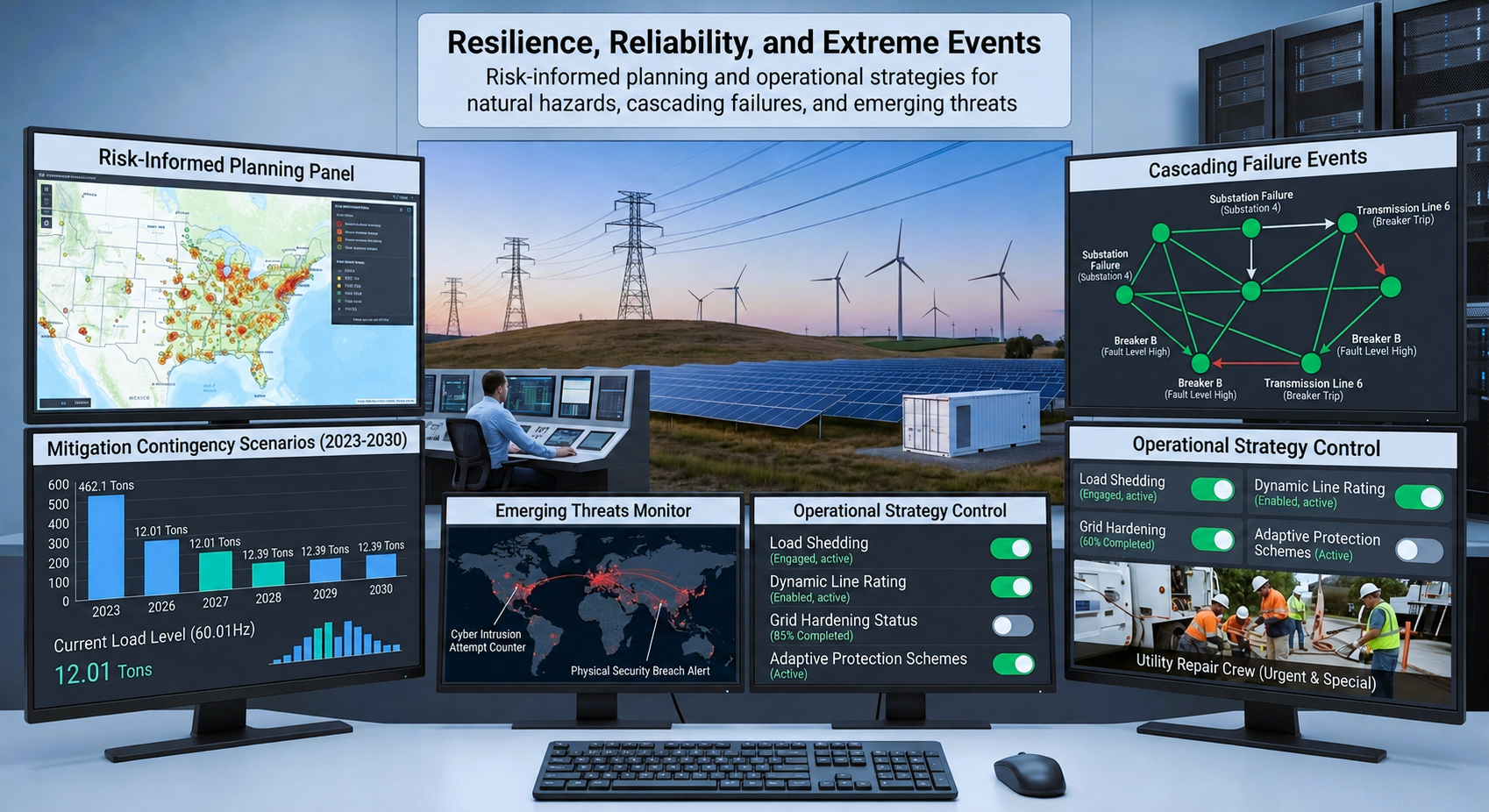
Resilience, reliability, and extreme events
Risk-informed planning and operational strategies for natural hazards, cascading failures, and emerging threats.
E-RESILIENCY Laboratory · Michigan State University
We advance the reliability, security, stability, resilience, and efficiency of modern power and energy systems through modeling, intelligent control, cybersecurity, and real-time experimental validation.
About the laboratory
Led by Dr. Mohammed Ben-Idris, the E-RESILIENCY Laboratory investigates the planning, operation, and control of cyber-physical energy systems. Our work spans power-system resilience and reliability, inverter-dominated grids, distributed energy resources, microgrids, cybersecurity, artificial intelligence, and real-time simulation.
Research themes
Our research combines physical models, data, real-time measurements, and intelligent decision tools across the full electric-energy system.
Risk-informed planning and operational strategies for natural hazards, cascading failures, and emerging threats.
Aggregation and coordinated control of distributed resources for voltage, frequency, reliability, and restoration support.
Hardware-, software-, and controller-in-the-loop validation for power-system operation, protection, and control.
Data-driven models and secure decision support for modern grids, microgrids, and large emerging loads.
Selected projects
Current and recent projects are supported by NSF, the U.S. Department of Energy, and the MSU Foundation.
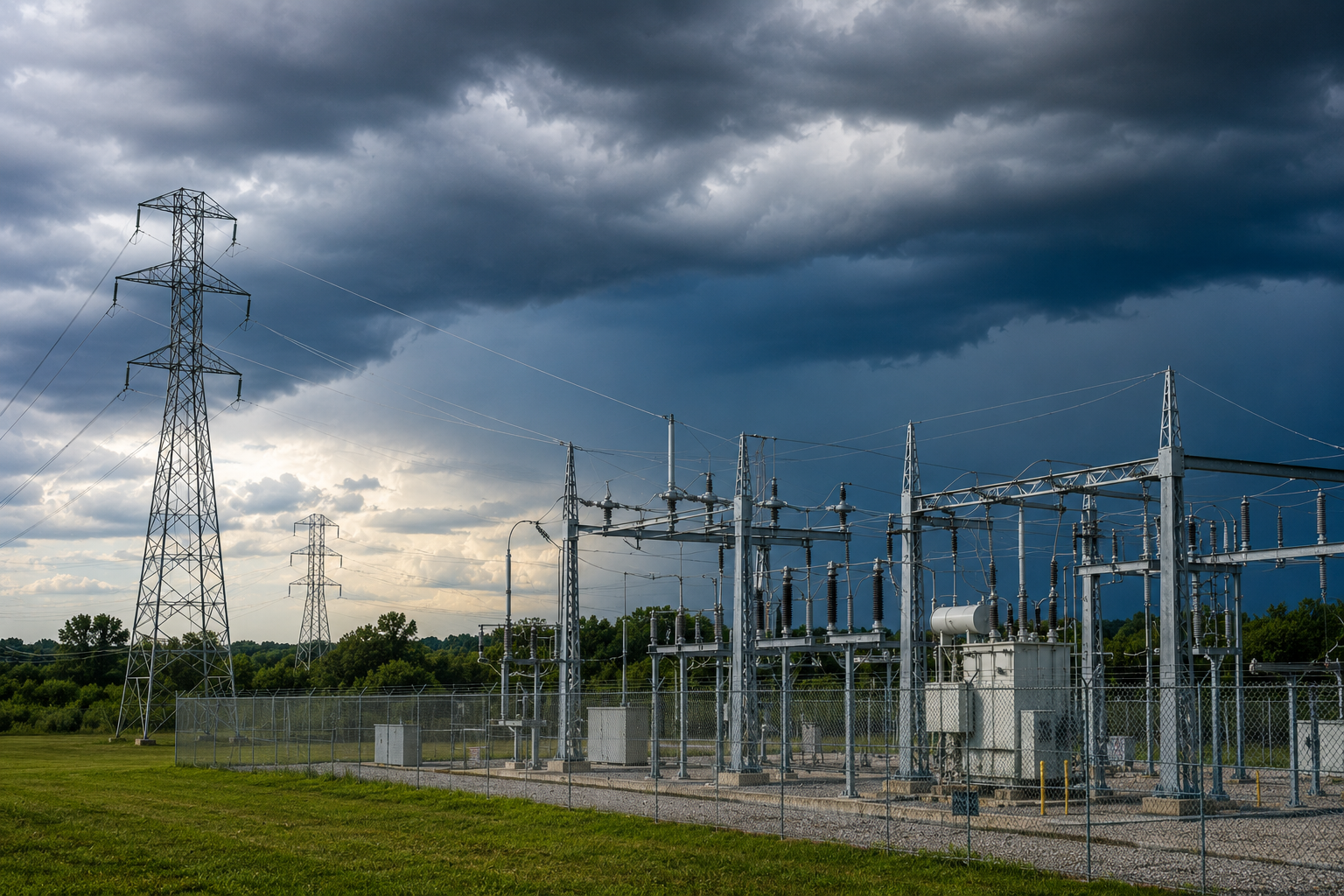
Models, metrics, and decision methods for limiting failure and attack propagation across power, communication, computation, and control layers.
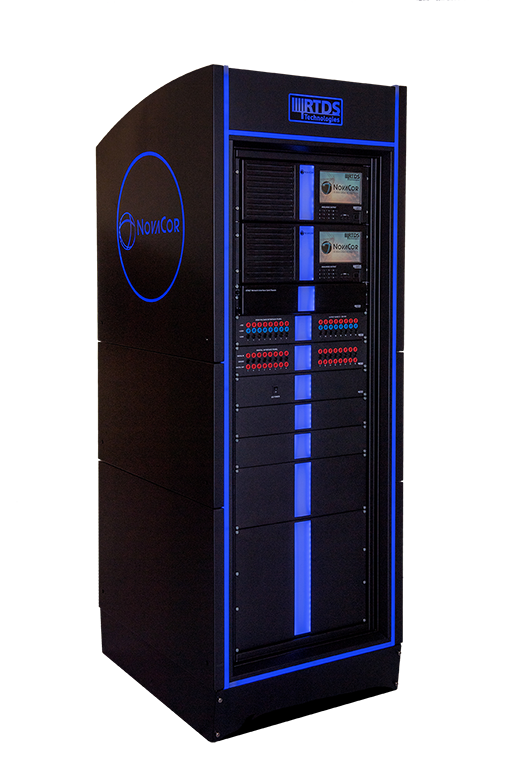
A cyber-physical energy systems testbed for multi-timeframe simulation, cybersecurity research, and resilient communications.
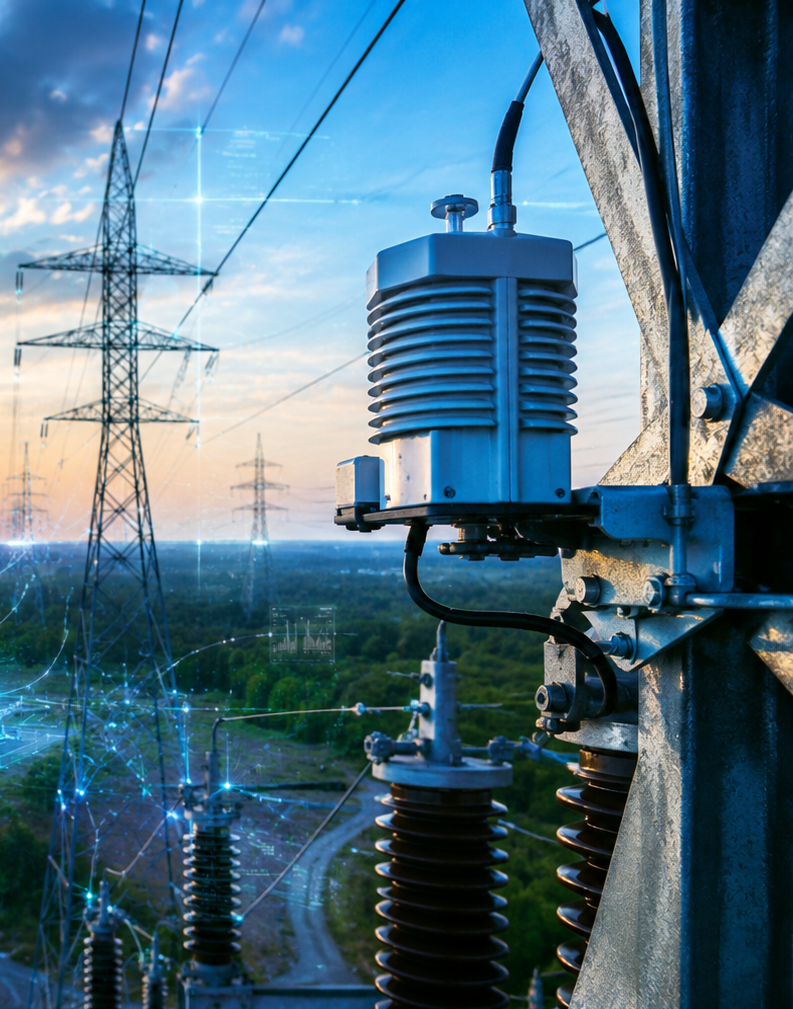
Direct and indirect contact DLR technologies to increase transmission capacity and reduce congestion without reconductoring.
Latest updates
Selected funding, publications, student achievements, and professional activities.
The project will demonstrate direct and indirect contact DLR technologies to improve transmission utilization, reduce congestion, and support renewable integration.
A multi-disciplinary platform for modeling, control, cybersecurity, and training.

Recent work addresses resilience assessment, distribution-system reliability, and cloud-based frequency control.
Prospective graduate students, postdoctoral researchers, undergraduate researchers, and collaborators are invited to learn about the laboratory.