 The Donald Morelli Research Group
History of Themoelectrics
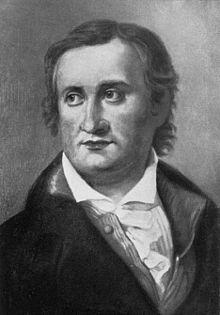 |
Thomas Johann Seebeck discovered in 1821 that a circuit made of two different metals could deflect the needle of a compass when the junctions of the two metals were held at different temperatures. The Seebeck effect describes this phenomenon in which an electrical voltage is induced by applying a temperature gradient to a material. This effect is measured by the Seebeck Coefficient with units of volts per Kelvin (or more often microvolts/Kelvin in thermoelectrics). While Seebeck interpreted the needle deflection as a direct result of the temperature gradient and did not observe the electrical voltage in his work, he is still credited discovering the Seebeck Effect. |
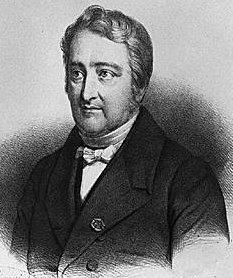 |
Jean Charles Anthanase Peltier found in 1834 that passing a current through a circuit made of two different materials could cause one junction to be heated and the other to be cooled. The Peltier effect is often described as the opposite of the Seebeck effect. This effect was more clearly demonstrated in 1838 by Heinrich Lenz who passed a current through a circuit of bismuth and antimony wires in one direction causing a drop of water to freeze, while reversing the direction of the current caused the ice to melt. |
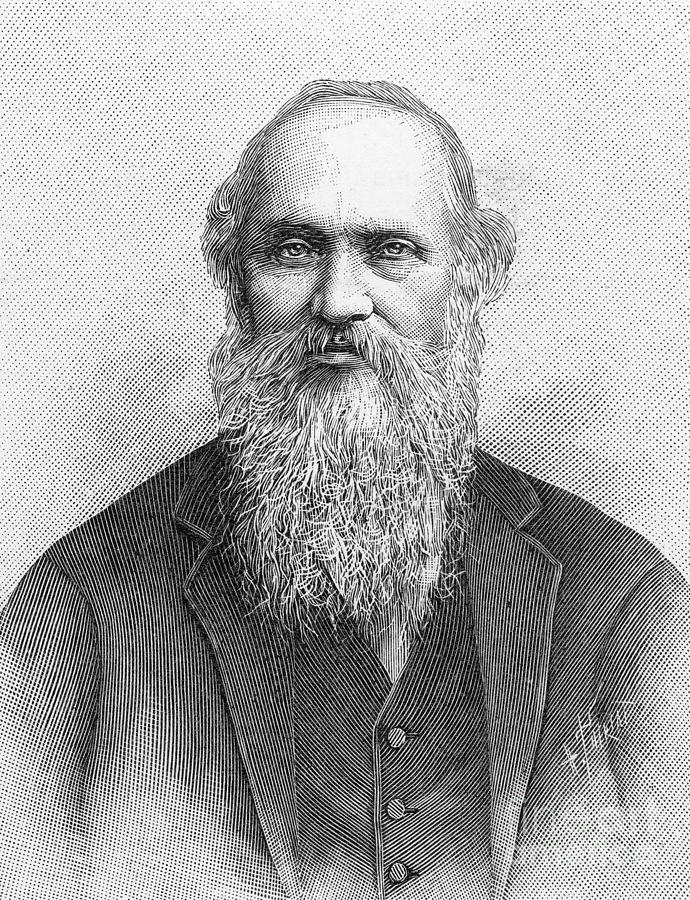 |
Sir William Thomson aka Lord Kelvin was the first to note that the Peltier effect was simply the reverse of the Seebeck effect and that the coefficients were thermodynamically related. Thomson also discovered that the Seebeck and Peltier effects occur not only in circuits of two different materials but also occured throughout the length of a single material as long as the temperature gradient (or applied current) is maintained. This phenomenon is know as the Thomson effect. |