Project Overview
With a constant need for new sophisticated technology to meet the consumer's needs, General Motors (GM) climate control systems must be modified in order to stay competitive. GM's climate control system is moving from analog interface actuators and sensors to devices that use a Local Interconnect Network (LIN) serial protocol communication to communicate between the Electrical Control Unit (ECU) and the sensors and actuators. The analog devices used currently send signals through multiple wires, depending on the number of components, and are processed by the ECU. The extra wires add additional cost, weight, and less precision for the overall system due to the delay of ECU processing. With the use of LIN, single wire communication to and from the actuators and sensors provide less cost, weight, and greater accuracy due to intelligent schedules that are predefined in the LIN protocol. Due to these qualities, LIN is being researched and introduced into RCP environments.
Designing and building an ECU is not a simple task. In control algorithm implementation, register level programming for the ECU is required. This makes designing and testing of control algorithm implementation extremely difficult and costly because of its complexity. In order to reduce the level of difficulty and cost, GM is looking into Rapid Control Prototyping (RCP) systems that have been developed over time which remove the need for register level programming in the prototyping phase of an ECU. The front-runner in RCP development is dSPACE, and GM is working with them to use their latest control systems testing hardware and software packages. dSPACE's systems allow for MATLAB/Simulink controllers to be created and downloaded into an ECU. dSPACE's Control Desk software can then be used to manually change parameters, such as temperature, solar intensity, or humidity to fully simulate a climate control environment for a vehicle.
The design task for this team was to setup the foundation for a fully functional climate control system in a vehicle. The foundation includes designing and developing multiple LIN drivers to be able to transmit and receive signals, via a LIN bus, from the ECU to the actuators and sensors. The team expected the cost of the project upon initial interpretation to be around approximately $1000 which was $500 above the allotted budget. This was later determined inaccurate when thoroughly researching and fully understanding each aspect of the team's project. The team must build the final design in such a way that allows for GM to modify the driver design for reusability. A technical document must also be constructed for each driver to fully detail the steps taken to create the driver. Two drivers will be designed for two LIN based sensors including an Indicator Light and Solar Sensor (ILSS) and a Rain Light and Humidity Sensor (RLHS). The LIN drivers are to be designed in Simulink and downloaded to Control Desk to properly read environmental conditions such as ambient light, sensor cover temperature, solar intensity, solar azimuth angle, solar elevation angle, and humidity. Also, a driver for LIN based actuators must be designed to control the basic actuator functions such as speed and end-stop learning functions. The RCP Control Desk software will then be used to conduct testing on the devices to ensure proper communication and functionality. With this foundation set, in perspective, the teams LIN drivers provides the creativity GM needs to utilize and design a fully functional climate control system in a vehicle.

Testing Results
Testing of the ILSS
ILSS in Equilibrium
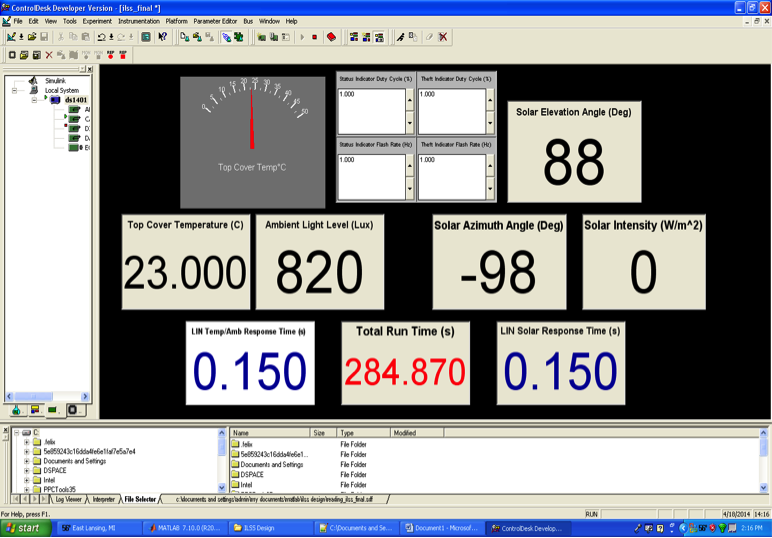
ILSS Ambient Response
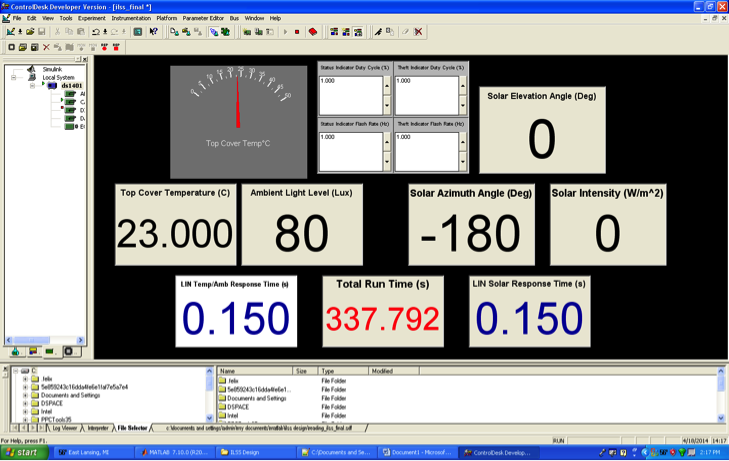
ILSS Flash Light Test
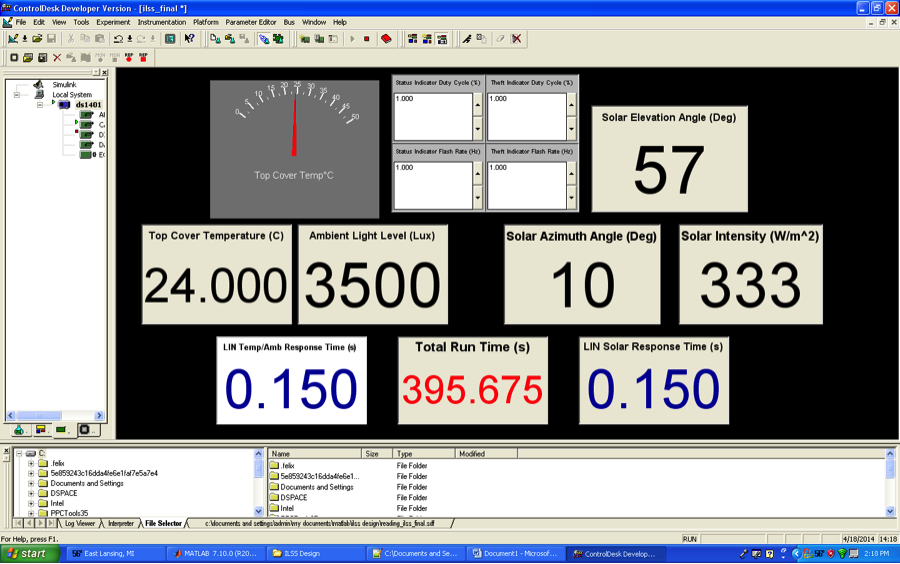
ILSS LED Testing
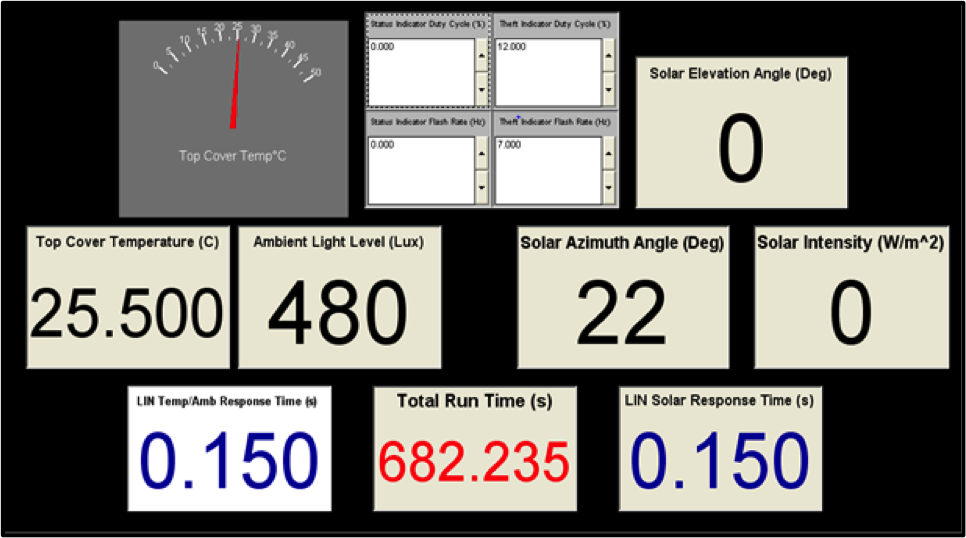
Theft Indicator LED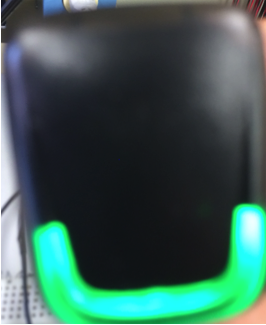
|
Charge Status LED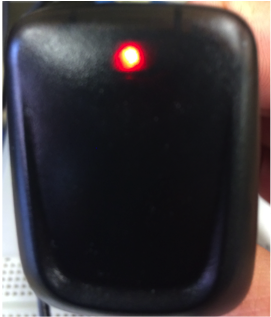
|
Testing of the RLHS
RLHS in Equilibrium
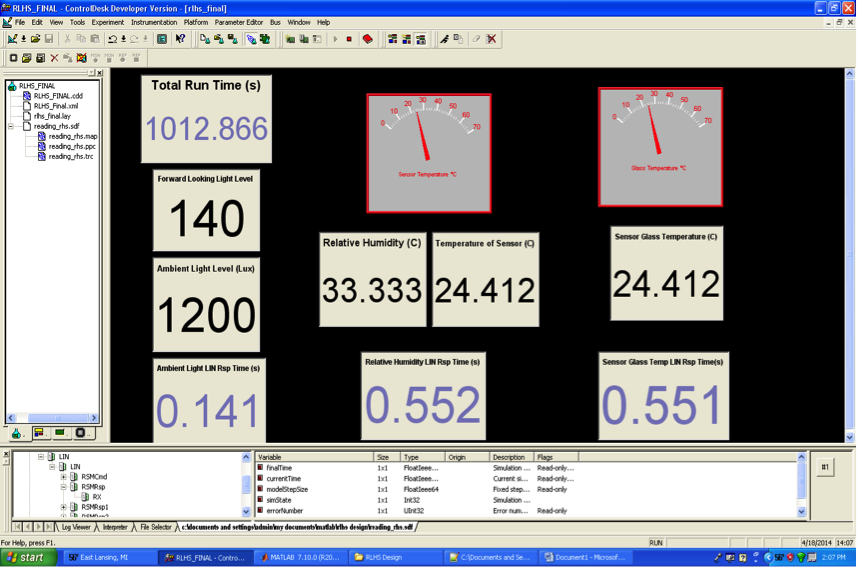
Covering the RLHS
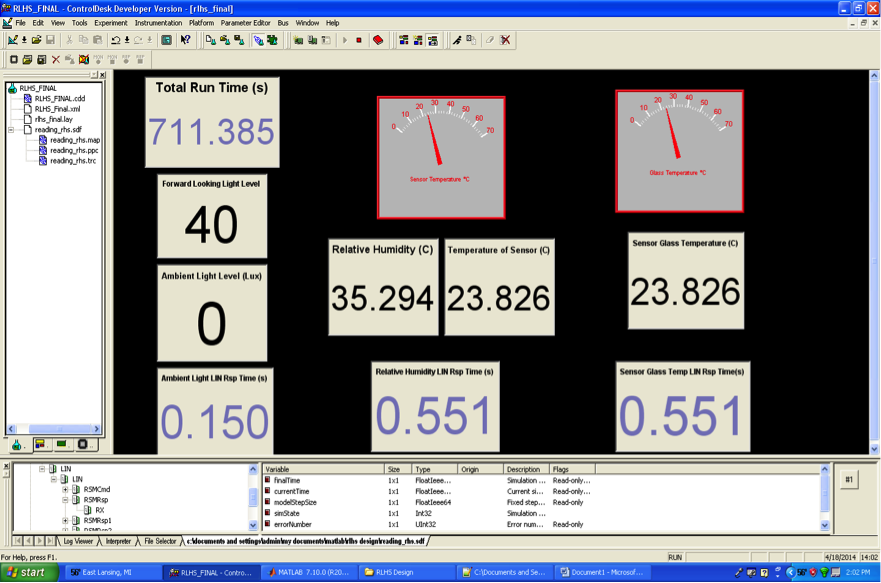
Increasing Heat to the RLHS
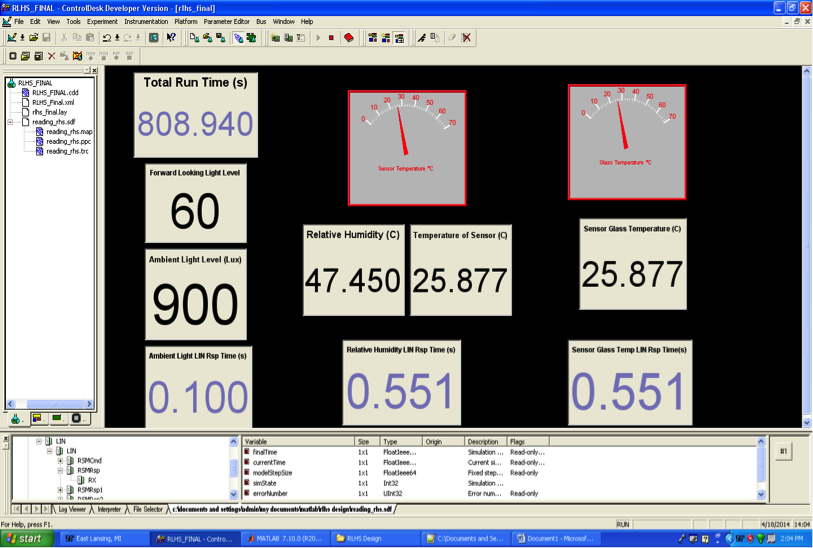
Blowing on the RLHS
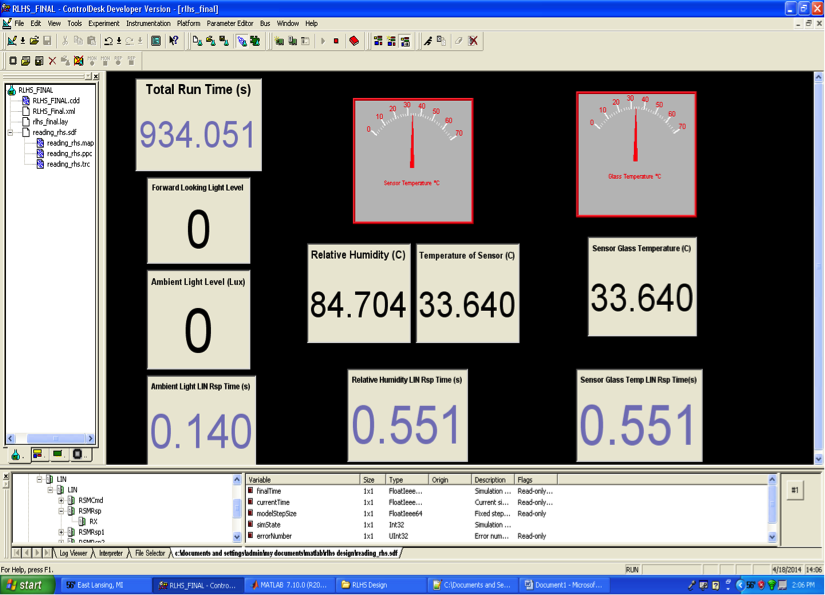
Testing of the Actuator
Actuator Initial Testing
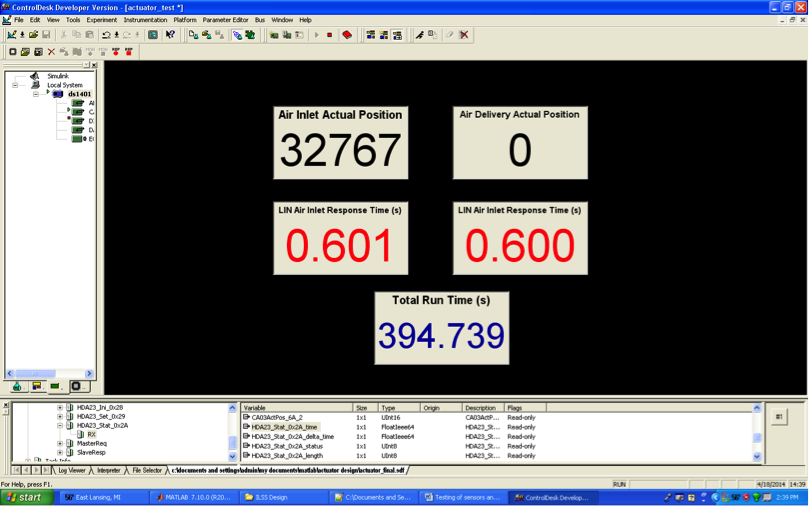
Actuator Test
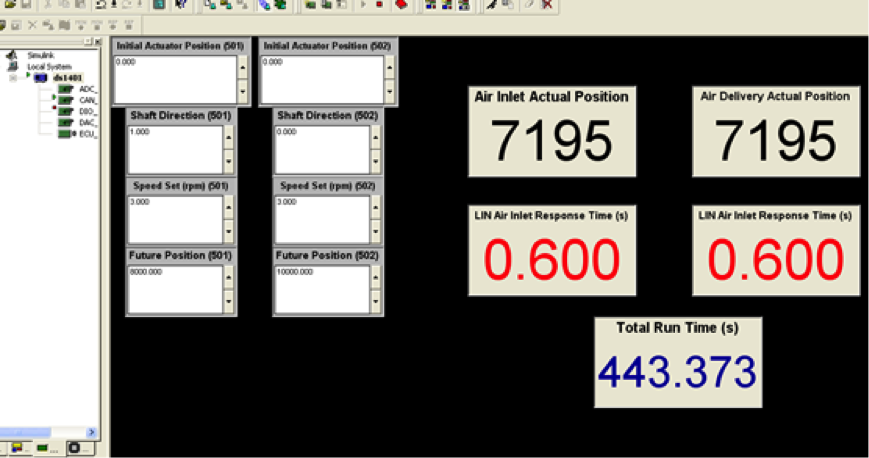
Final Budget