create your own website for free

Research Areas

The PUMA group at MSU focuses on the following research areas:
Physical Ultrasonics
Nondestructive Material Characterization 
Microscopy
Acoustics


Physical Ultrasonics

Mobirise

Linear and Nonlinear Resonance Ultrasonic Spectroscopy

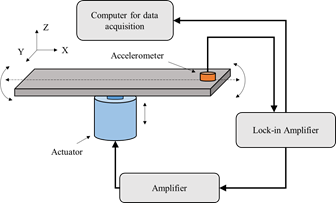
NRUS is an extension of the Resonant Ultrasound Spectroscopy. Instead of low excitation amplitudes, NRUS uses higher excitation and observes the nonlinear response. The resulting nonlinearity can be a combination of geometric and material nonlinearity. 
(Figure: setup for NRUS exciting the fundamental flexual mode)
Mobirise


Nonlinear Ultrasonic wave propagation

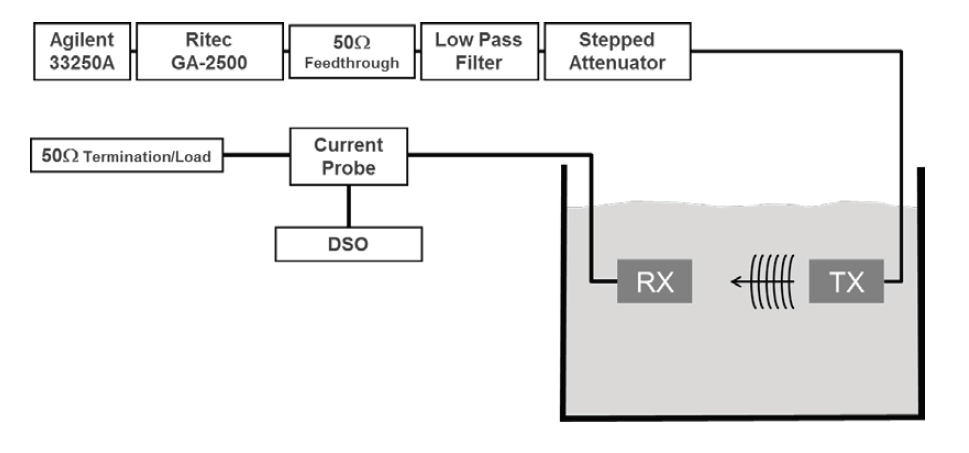
Finite amplitude propagating waves can be used to characterize the nonlinear properties of the medium. The Transducer calibration approaches have to be followed to measure the displacement amplitude in "meters" rather than voltage. This can be used for fluids as well as solids. The nonlinear response can be connected to dislocations, and Luders band, micro-cracking, etc.  
(Figure: setup for measuring the acoustic nonlinearity parameter, beta of water)
Mobirise

Nonlinear material property estimation

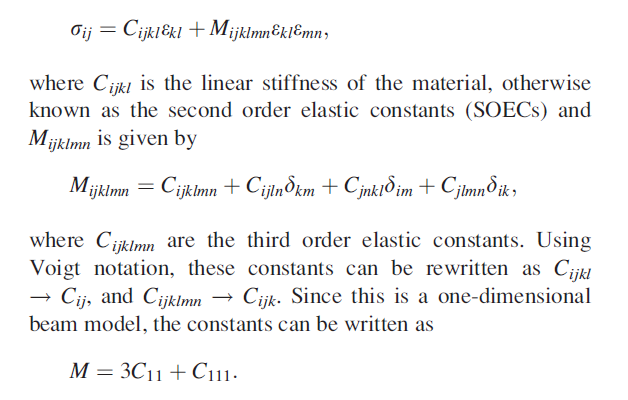
The nonlinear properties of a material can be very important in describing the materials response. Extending the concept of Hooke's law to include a nonlinear stiffness can capture any material nonlinearity. The focus of this research area is the inversion of the linear and nonlinear stiffness using nondestructive methods such as NRUS and ultrasonic wave propagation tools. 
Nondestructive Material Characterization and Evaluation

Mobirise


Ultrasonic NDE

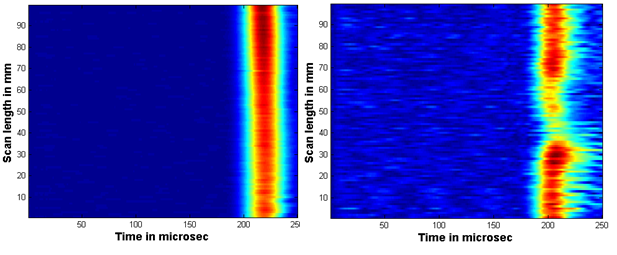
Ultrasonic NDE uses ultrasonics (50kHz to 20 MHz) for detecting defects in structures. Defects such as cracks in silicon wafers, solar cells, or other metallic structures can be detected and quantified or sized without destructive testing.
(Figure: B-scan of intact and damaged silicon wafer used for solar cell fabrication).

Mobirise

Stiffness measurement

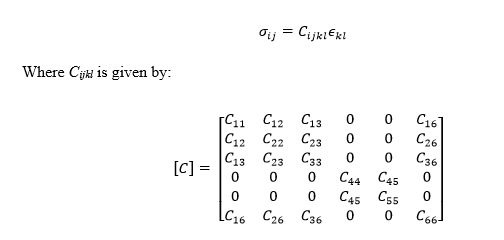
The ultrasonic velocity is related to the stiffness and density. Using ansiotropic Christofel's equation, the formulation for velocity in different directions can be obtained. The physically measured ultrasonic velocity can be used to invert the 6x6 elastic stiffness matrix. 

These can also be performed at high temperatures, therefore making them ideal for in-situ characterization. 

Mobirise


Attenuation measurement

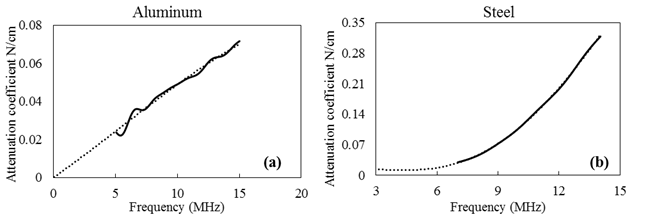
Ultrasonic techniques can also be used to measure attenuation of a material. The attenuation parameter of a structure can be used to characterize the grain sizing, micro-defects, and absorption. 
(Figure: attenuation parameter of aluminum 6061 and Steel 1018 samples)

Microscopy

Mobirise


Acoustic Microscopy

Scanning acoustic microscopy for material characterization and nondestructive evaluation. Feature resolution on the order of microns(depending on materials). 

Mobirise


Atomic Force Microscopy

Use of AFM for microelasticity measurements. 

Acoustics

Mobirise

Non-contact Resonant Ultrasound Spectroscopy

Speaker and microphone based non-contact resonant ultrasound spectroscopy. 

Mobirise

Acoustic arrays

Acoustic arrays for object detection