Sensing Intelligence in Agriculture and Autonomous Vehicles

We develop algorithms that enable machines to perceive, understand, and act in complex environments — spanning precision agriculture and autonomous vehicles.

01 / Smart Agriculture

Plant & Animal Intelligence

Smart agriculture is the next big frontier for automation. New sensors combined with deep learning enable individual animal monitoring and health assessment, automated crop inspection, and precision phenotyping. We collaborate with agriculture experts to improve animal welfare and raise crop yields through computer vision.

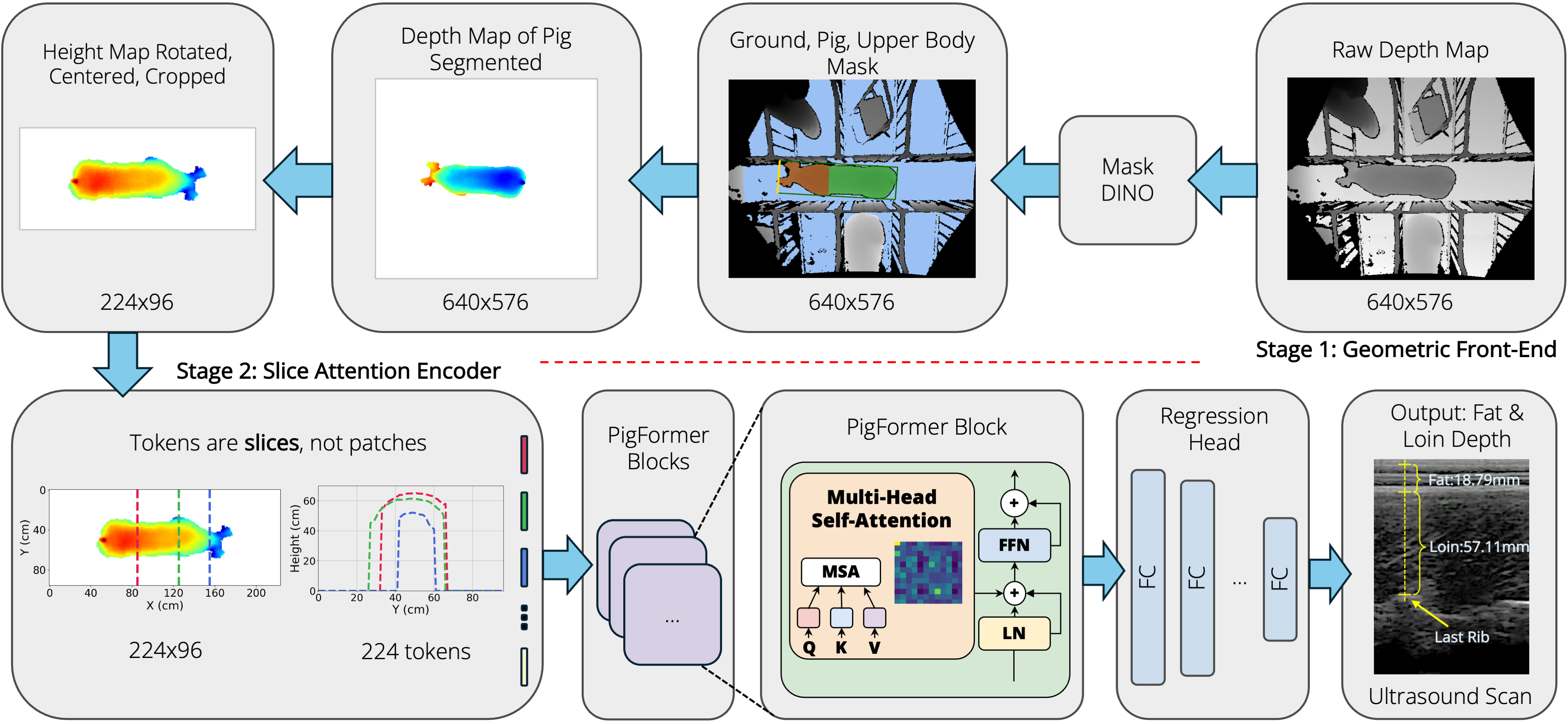
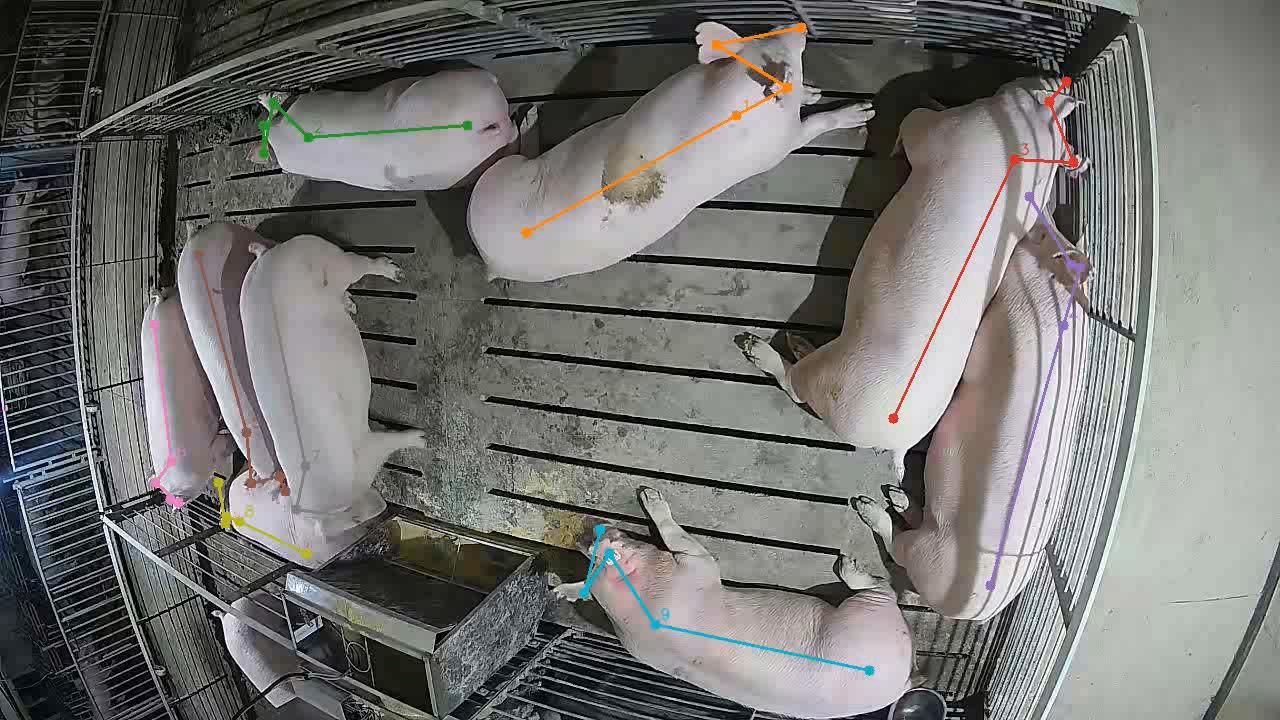
Pig tracking with keypoint-based pose estimation
LED intervention system for poultry with cameras and LED arrays to disrupt piling
Smart Ag. Tech. 2026

LED Interventions for Poultry Piling

Cameras and LED arrays automatically disrupt piling in cage-free poultry, reducing suffocation risk and improving welfare.
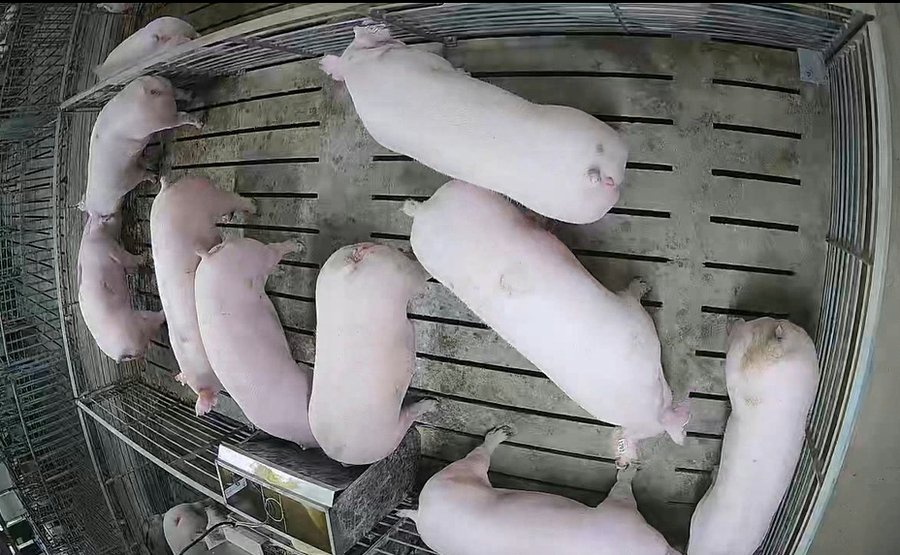
Gilt (female breeding pig) activity recognition showing eating, drinking, and movement behaviors
USPLF 2025

Gilt Activity Dataset

Multi-modal RGB and RGB-D dataset of gilt (female breeding pig) activities including eating, drinking, and moving. Presented at USPLF 2025 for precision livestock farming research and behavior modeling.
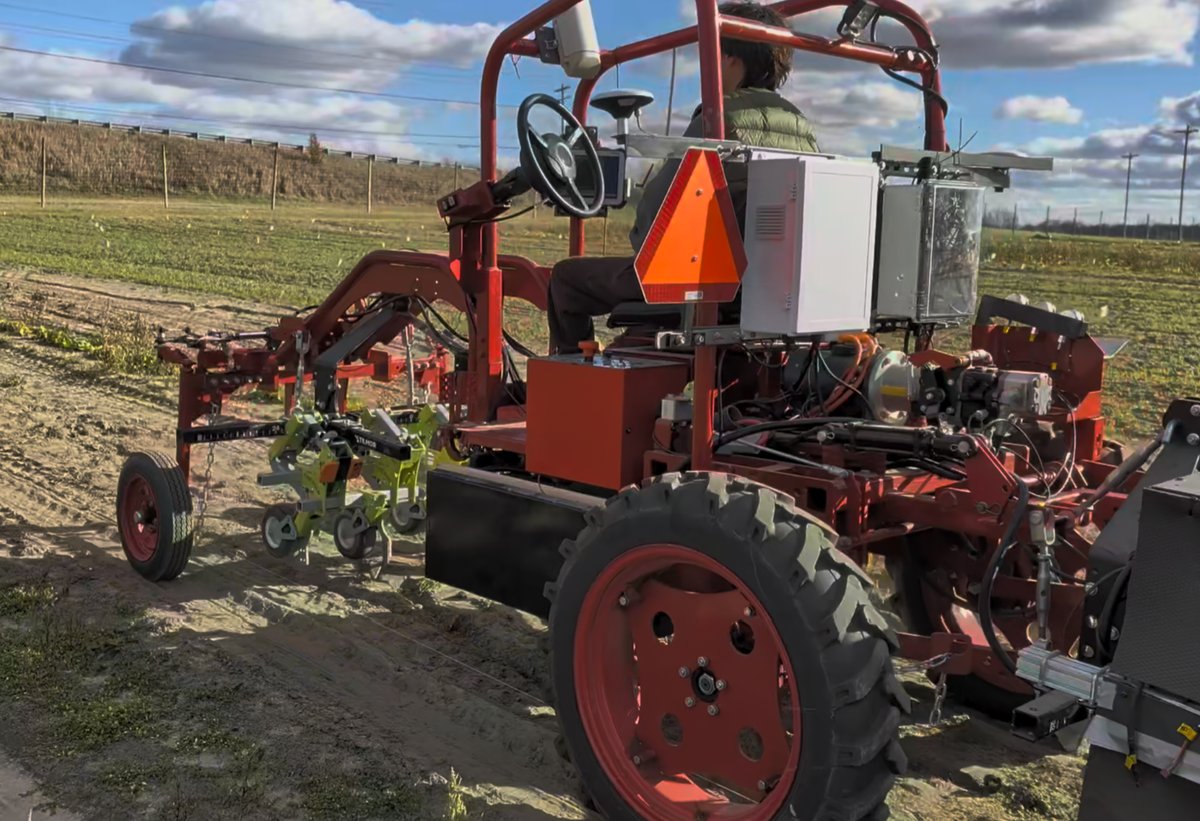
Electric tractor with AgOpenGPS autosteer system installed
Great Lakes Expo 2025

Autosteer System for a Tractor

Affordable (under $3,000), open-source AgOpenGPS autosteer system integrated onto an electric tractor. Achieves centimeter-level row-following accuracy when combined with an RTK base station.
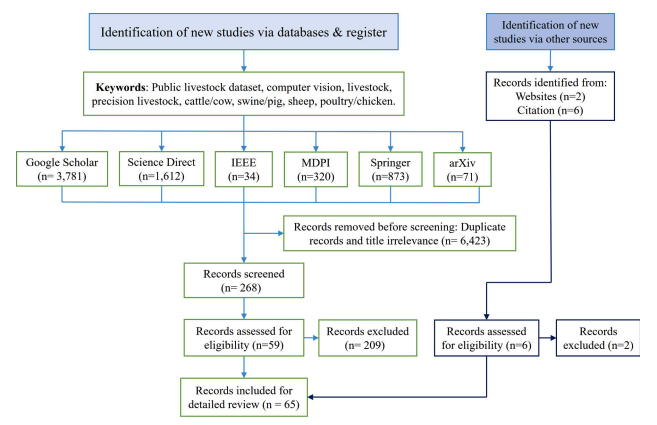
Survey of public computer-vision datasets for precision livestock farming across modalities and tasks
Comp. & Electronics in Ag. 2025

CV Datasets for Precision Livestock Farming

Survey of publicly available computer-vision datasets for precision livestock farming research, covering modalities, tasks, and coverage gaps.
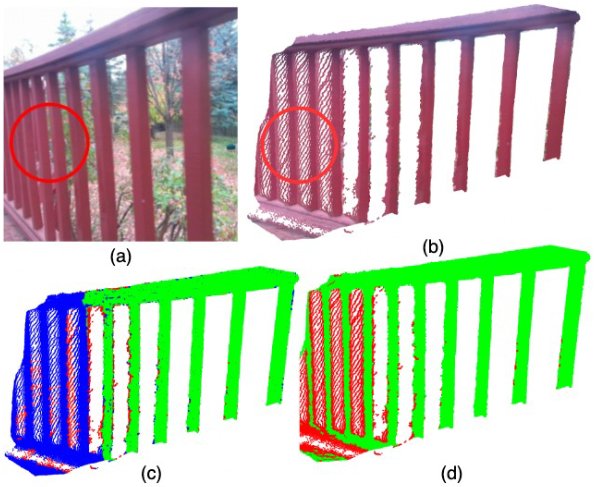
Smeared pixel removal from consumer depth sensor 3D models — before and after comparison
WACV 2024

Automated Annotation for Smeared Pixel Removal

Smeared pixels are a problem with many consumer depth sensors used in building 3D models. A self-annotated approach eliminates the need for manual annotation in training a smeared pixel removal algorithm.
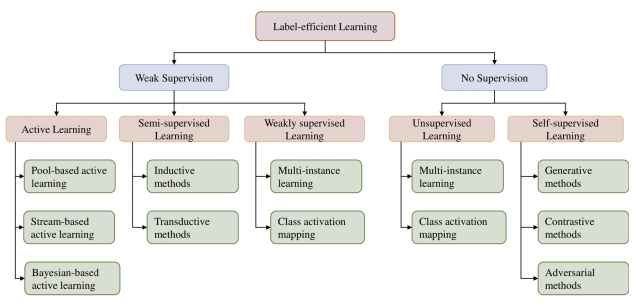
Label-efficient learning in plant agriculture
Comp. Elec. Agriculture 2023

Label-Efficient Learning in Plant Agriculture

Comprehensive review of learning with fewer annotations, addressing the challenge of limited labeled data across plant agriculture tasks.
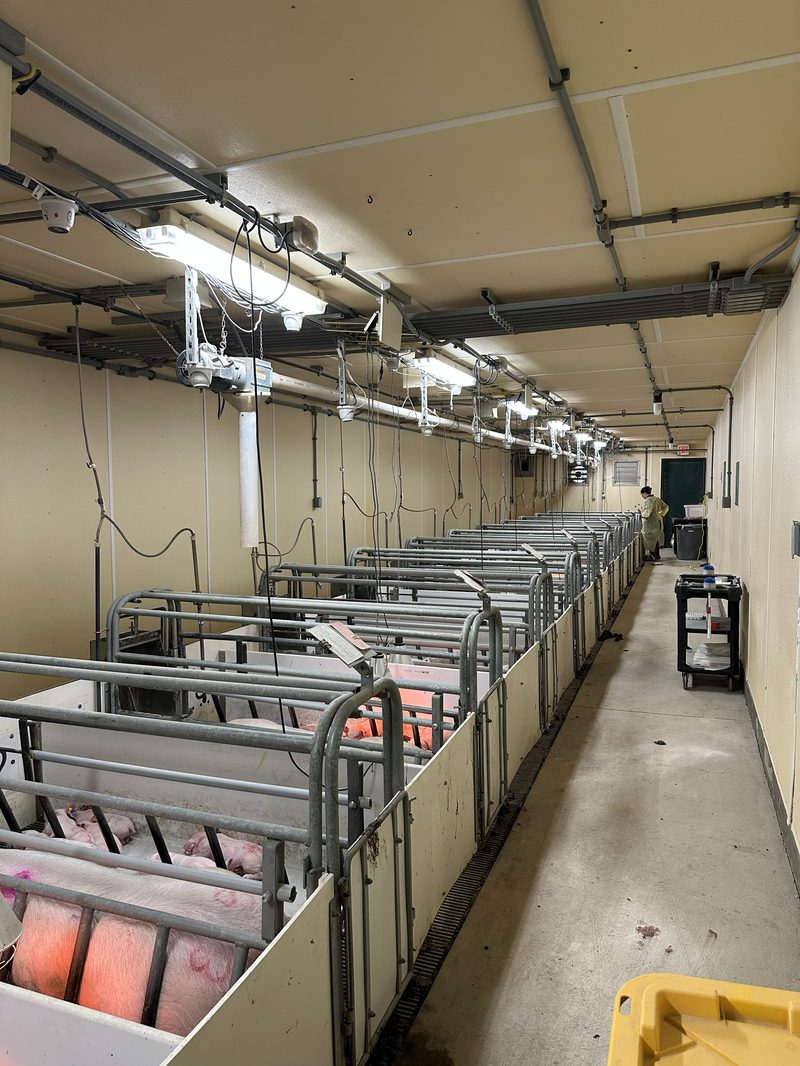
Long farrowing corridor with overhead cameras and sensors for automated animal monitoring
Applied Animal Behaviour 2023

Automated Systems for Animal Monitoring

Analysis of what is needed when building datasets to support Automated Behavior Analysis of animals, led by Janice Siegford with a focus on welfare-relevant behaviors.
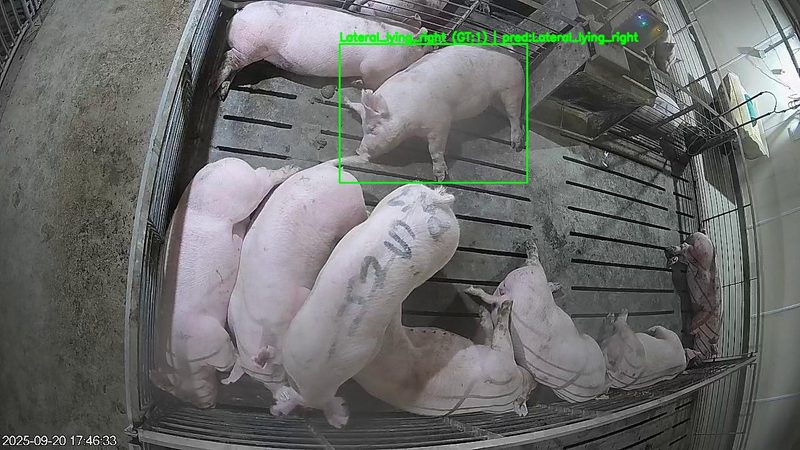
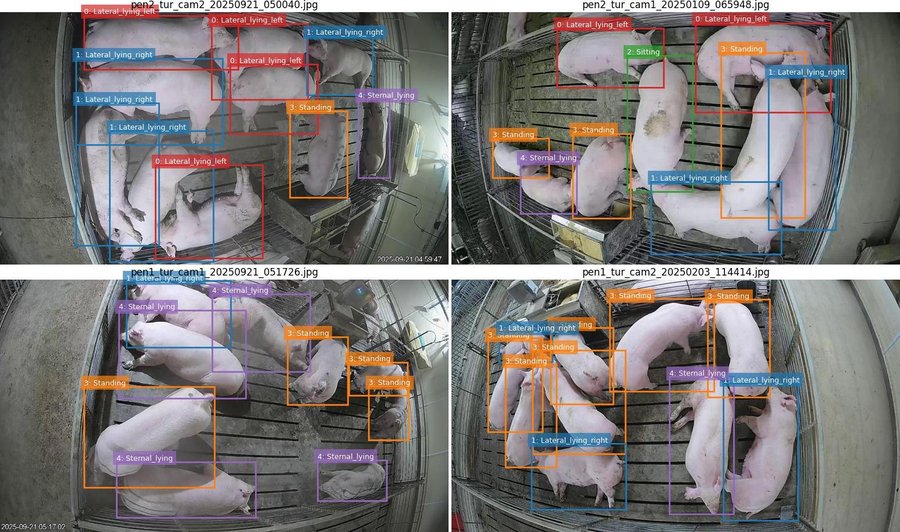
Pig posture classification showing lateral lying detection with confidence scores
2022 Innovation Award

Innovation of the Year

MSU College of Agriculture and Natural Resources 2022 Innovation of the Year, awarded to Madonna Benjamin, Daniel Morris, Steven Yik, and Michael Lavagnino for sensor systems that monitor female swine body condition and lameness.

Voxel model of a maize plot showing growth over the season at seven time intervals
ESSOAR 2022

Maize Phenotype Estimation from LiDAR

UAS-mounted LiDAR scans a maize diversity panel periodically over the growing season. Eleven phenotypes estimated with high correlation to manual measurements for six of them, using voxel-based growth models.
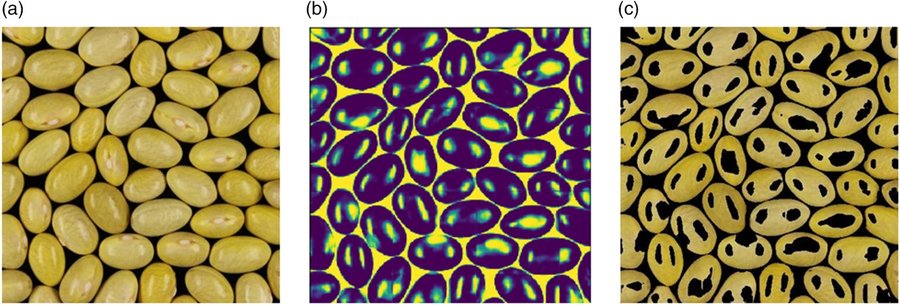
Bean seed coat segmentation: raw images, CNN segmentation, and extracted color regions
Plant Genome 2021

Seed Coat Genetic Analysis

CNN-based segmentation of bean seed coats to analyze color genetics of dry beans, greatly speeding up the processing of large numbers of beans. Collaboration with Rie Sadohara and Karen Cichy.
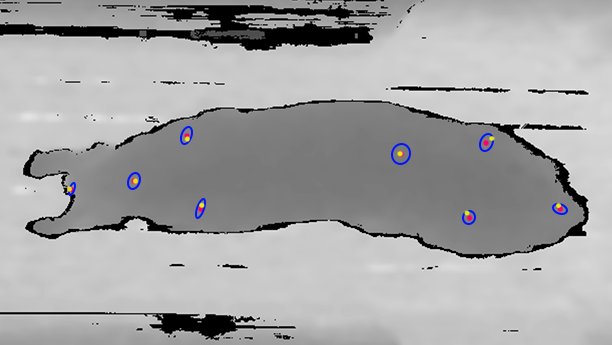
Depth image of sows with 2-sigma ellipses around estimated joint and body feature positions
IROS 2020 Best Paper Finalist

Pig Detection & Tracking

Semi-supervised deep learning methods for accurate detection and posture estimation of pigs in depth images. Best-paper finalist for Agri-Robotics, with 2-sigma ellipses illustrating joint estimation precision.
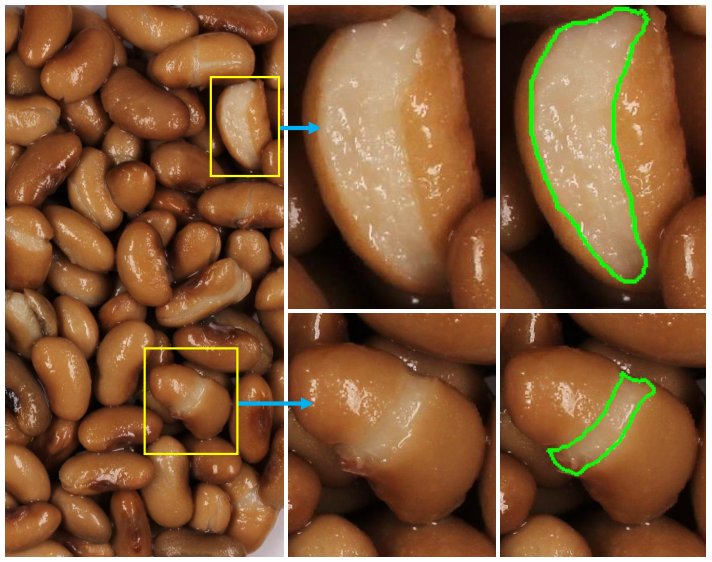
Dry beans with yellow bounding boxes highlighting splits and green contour overlay of segmented split regions
CVPPP 2019

Dry Bean Quality Analysis

Proposed Bean Split Ratio as a measure for quantifying bean quality related to splits after cooking and canning, with an automated algorithm for calculating it. If used to select new varieties, this can contribute towards improving bean quality.
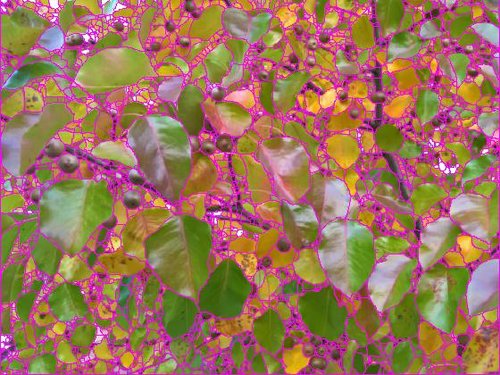
Automatic segmentation of dense foliage with individual leaf boundaries highlighted in pink
CRV 2018

Dense-Leaves Segmentation

Pyramid CNN approach for segmenting individual leaves in dense foliage with large internal variations and texture, automatically estimating boundaries for each leaf.
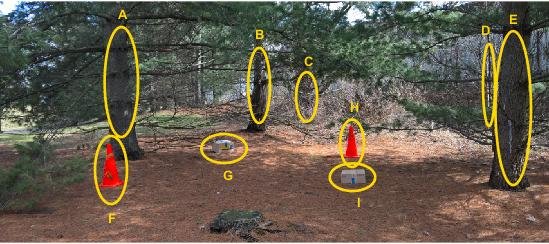
Cluttered off-road environment with navigation hazards and foliage for LiDAR discrimination
SPIE 2016

Obstacles & Foliage Discrimination for LiDAR

Object discrimination for off-road mobile robot navigation, finding hazards such as tree trunks, rocks, and cones that may be partially occluded by foliage.
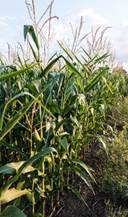
False-color visualization showing photosynthesis distribution on plant leaves
CRV 2016 / MVA 2015

Plant Photosynthesis & Phenotyping

Innovative sensor development to assess photosynthesis rates and their distribution on plant bodies, supporting crop breeding, selection, and modification.

02 / Autonomous Vehicles

Multi-Modal Sensor Fusion

We develop deep-learning methods to fuse data from multi-modal sensors — video, LiDAR, and radar — to achieve better accuracy in scene understanding. From depth completion to 3D object detection and multi-object tracking, our algorithms push the boundaries of what vehicles can perceive.

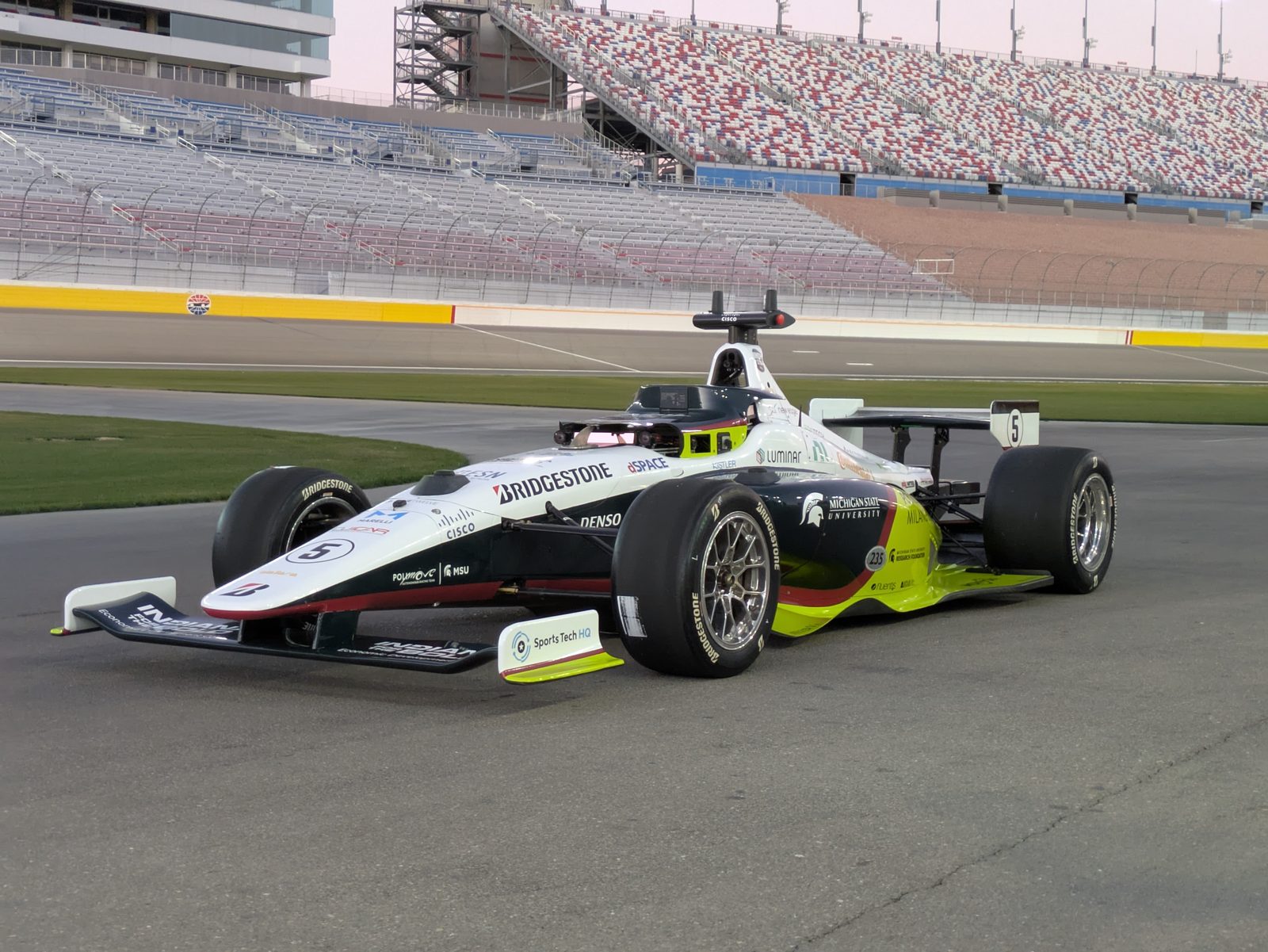
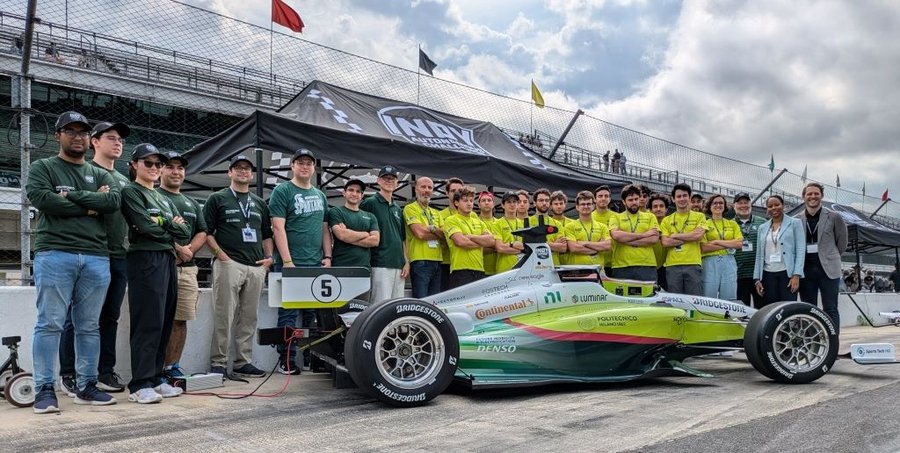
PoliMOVE-MSU autonomous racecar at Indianapolis Motor Speedway
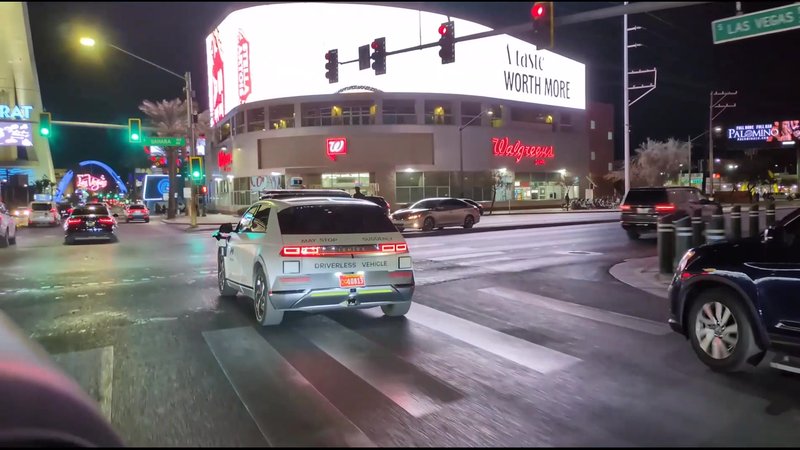
Driverless autonomous vehicle driving at night on Las Vegas streets
IROS 2023

TransCAR

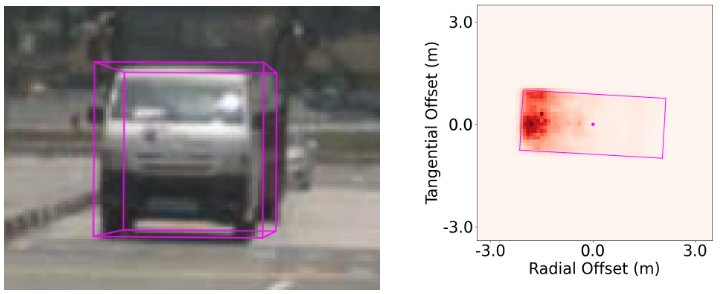
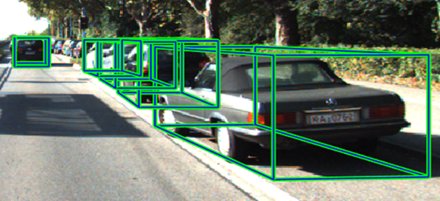
Automotive radar + camera fusion for 3D object detection using transformer-based cross-attention between modalities.

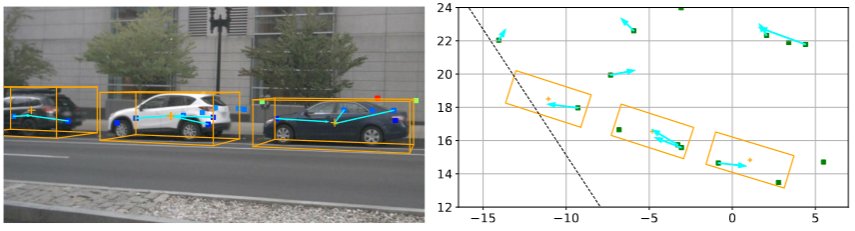
Radar-camera association for 3D object detection
AAAI 2023

RADIANT — Radar-Image Association

Associates radar returns with image-based object centers to improve the performance of image-based 3D object detection.

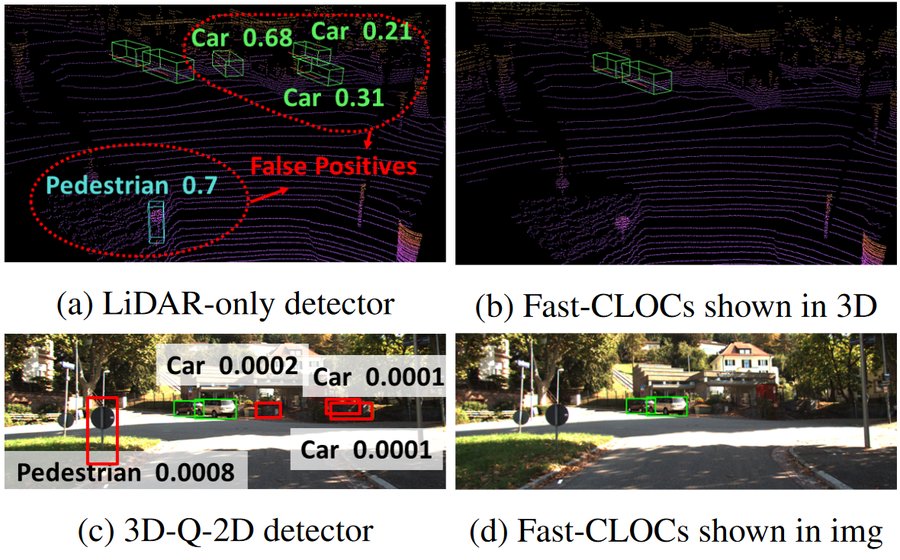
Fast-CLOCs LiDAR-camera fusion architecture
WACV 2022

Fast-CLOCs

Su Pang's latest LiDAR-camera fusion achieves a big speed-up and reduced memory over CLOCs, now running on a single-GPU computer for state-of-the-art 3D detection.

ICCV 2021 Oral

Full-Velocity Radar Returns

Yunfei Long's work calculates full-velocity radar returns using radar-camera fusion, overcoming the limitation of Doppler radar which only provides radial velocity measurements.

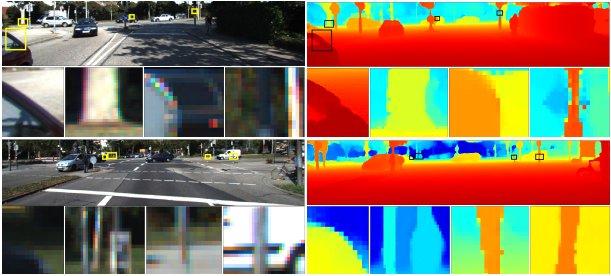
TWISE depth completion obtaining fine details and boundaries at occlusion edges
CVPR 2021

TWISE — Depth Completion

Saif Imran's improved depth completion addresses the tricky problem of super-resolving depth at occlusion boundaries by extrapolating both foreground and background surfaces across the boundary, then fusing them.

Radar-camera depth completion showing dense depth map from sparse radar returns
CVPR 2021

Radar-Camera Depth Association

Yunfei Long's radar-camera depth completion method probabilistically associates radar returns to image pixels, then uses radar plus images to estimate a dense depth map.

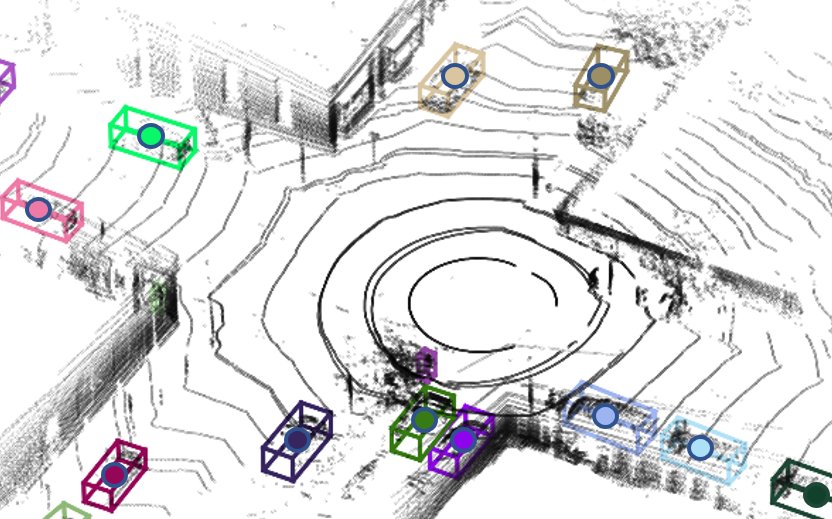
Random Finite Set-based 3D multi-object tracking visualization
ICRA 2021

RFS-M3 — 3D Multi-Object Tracking

Su Pang's tracking method using Random Finite Sets for more rigorous probabilistic scene modeling obtains state-of-the-art tracking performance.

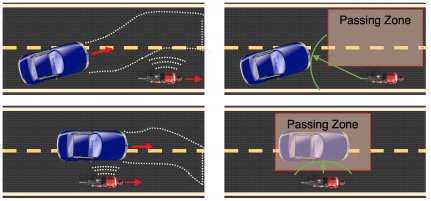
Automated vehicles sharing the road with pedalcyclists
IEEE TIV 2020

Pedalcyclists Detection Survey

Automated vehicles create dangers and opportunities for improved safety of pedalcyclists as they share the road. Surveys detection and localization methods across modalities and datasets.

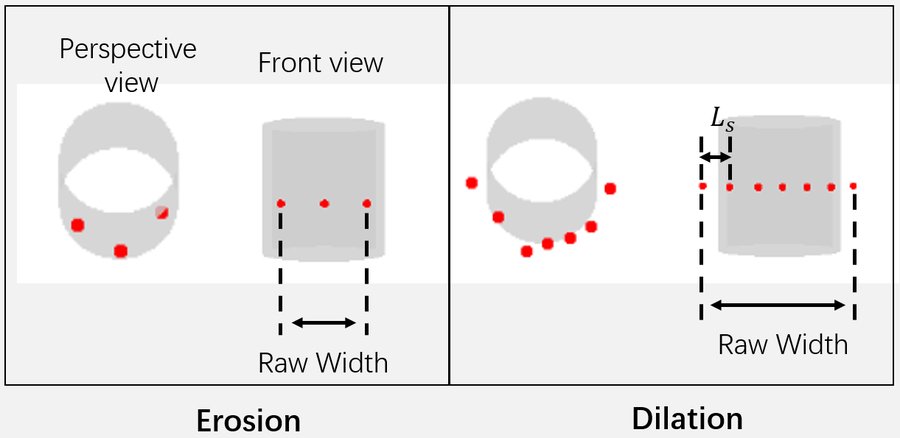
Examples of shape erosion and dilation in a LiDAR scan from traditional ray models
IROS 2020

LiDAR Essential Beam Model

Traditional ray models for LiDAR beams cause shape erosion or dilation, affecting width estimation of thin objects. A linearly diverging beam model with finite beam width yields more accurate object dimensions.

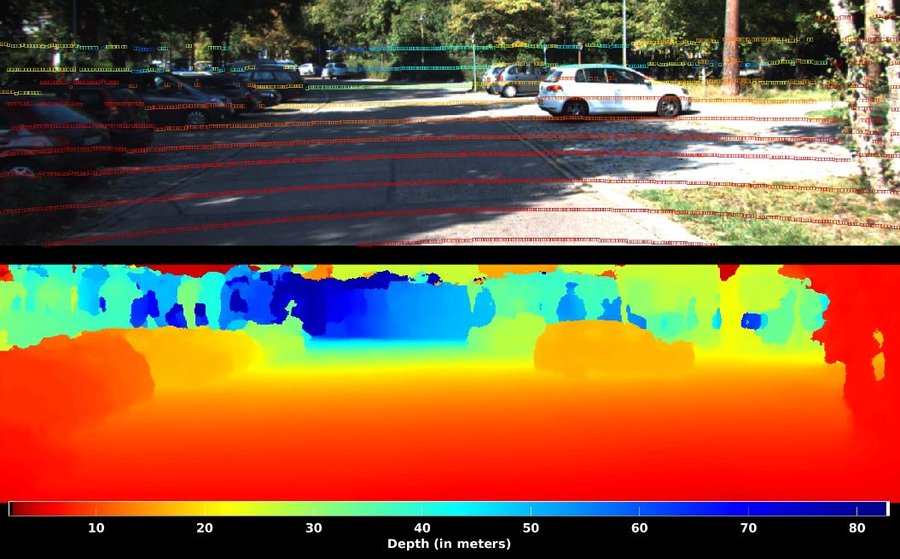
Depth completion showing color image with sparse LiDAR and dense estimated depth
CVPR 2019

Depth Coefficients for Depth Completion

Saif Imran, Xiaoming Liu, and Daniel Morris developed color-image-guided upsampling of LiDAR that avoids smearing depth across object boundaries and depth discontinuities.

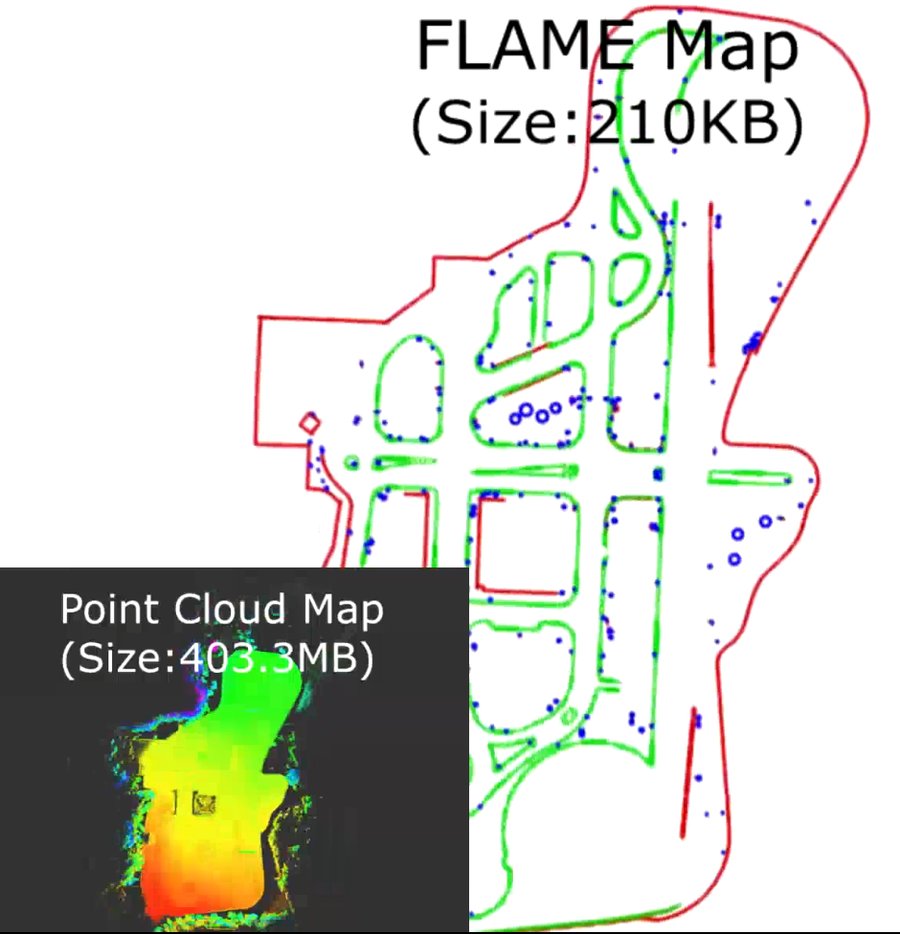
FLAME localization achieving similar accuracy to HD maps with 1/1000th the data
VTC 2018 / IROS 2019

HD Map & FLAME Localization

HD maps enable 10 cm-accuracy localization without GPS. FLAME (Feature Likelihood Acquisition Map Emulation) achieves similar localization accuracy with a map 1/1000th the size.

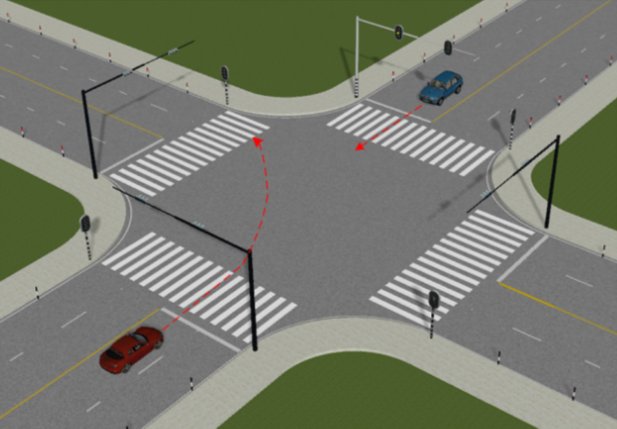
Oncoming vehicle turning at an intersection with trajectory prediction
IEEE TVT 2019

Turning Behavior Modeling

Accurate vehicle pose tracking and turning models enable rapid vehicle turning prediction, reducing collision risk especially at intersections.

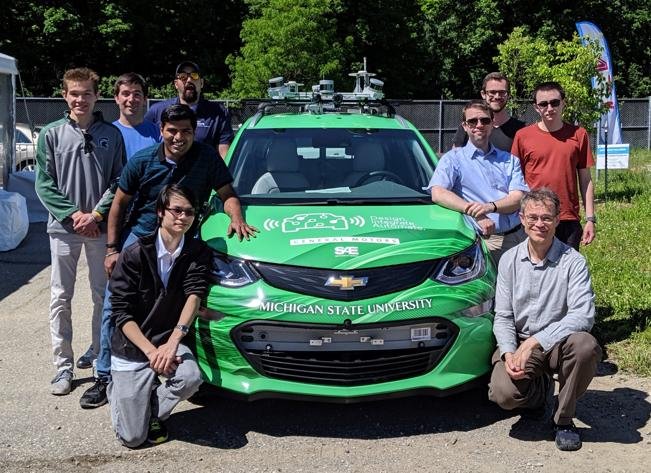
MSU Autodrive Challenge team with GM Bolt platform
Competition

MSU Autodrive Challenge

The MSU Autodrive Challenge team integrated sensing and control hardware and software into a GM Bolt.

Rough terrain and ground segmentation in cluttered environments
3DV 2015

Rough Terrain Ground Segmentation

Robust ground measurement cost function that accounts for occlusions and clutter. Modeled with a Markov Random Field and optimized with Loopy Belief Propagation for high-quality ground segmentation of LiDAR data.

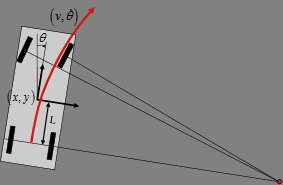
Kinematic models for LiDAR-based vehicle tracking
IEEE IV 2010 / IASTED 2009

LiDAR-Based Detection & Tracking (foundational)

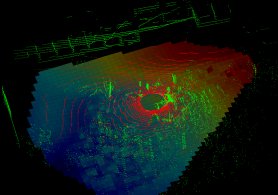
Within 3D LiDAR point clouds we seek objects such as people and vehicles, track them, and provide trajectory predictions — including clustering, clutter rejection, shape and motion models, and occlusion handling.

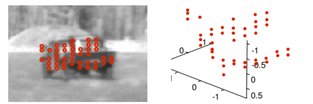
Sparse LiDAR points at long range for object shape classification
Object Classification

Object Classification Using LiDAR

LiDAR range measurements are precise but sparse at long range, making object shape and category difficult to determine. 3D shape-based categorization methods classify object types from sparse point clouds.

Research in Motion

Real-time video demonstrations of our computer vision systems running on livestock and poultry monitoring setups.

Pig Keypoint Tracking

Real-time multi-pig keypoint detection and skeleton tracking with pose estimation overlays in a swine research pen.

Pig Posture Classification

Automated posture recognition — standing, sternal lying, lateral lying — with bounding box detection and confidence scores.

Poultry Piling Detection

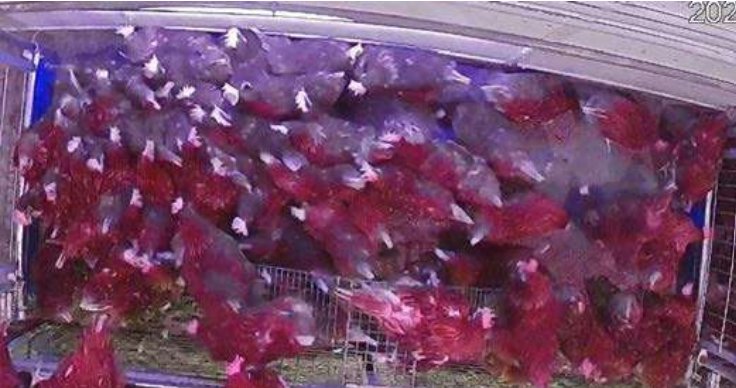
Camera-based monitoring system with real-time piling risk indicator for cage-free poultry welfare intervention.

Poultry Monitoring Camera

Overhead camera view of cage-free poultry for automated behavior monitoring and welfare assessment.

LED Lighting Intervention

Walkthrough of the LED intervention system in a poultry barn, showing green LED strips used to mitigate piling behavior.