Final Design and Demonstration
Final Design
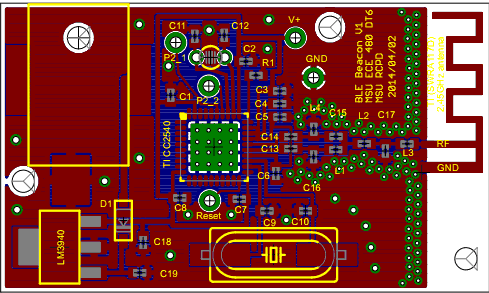
Final Design Layout
Based on the design requirements and the rankings of the possible designs, the TI cc2540
based design was selected. Initially a prototype beacon was built using the Bluegiga BLE
module because it includes all the necessary components to begin software development.
This allowed the group to become familiar with the BLE and the iBeacon protocol while
concurrently developing the more complex hardware of the TI design.
The final beacon design focused on creating a low cost solution, with minimum impact to
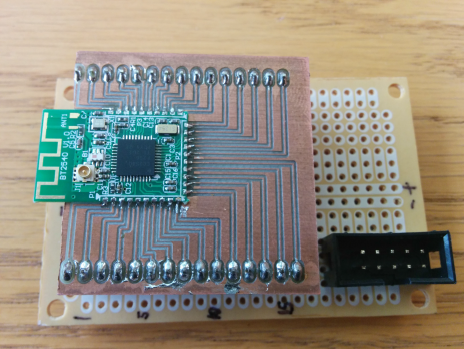
the performance. A custom PCB was created to implement the support circuitry required
by the cc2540. Cost saving measures such as using a PCB antenna instead of a discrete
IC based antenna and a 2layer
PCB instead of the 4layer
PCB common in RF designs.
The simple operation of the BLE beacon helped keep the component cost low.
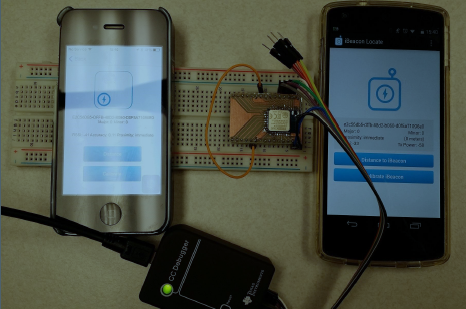
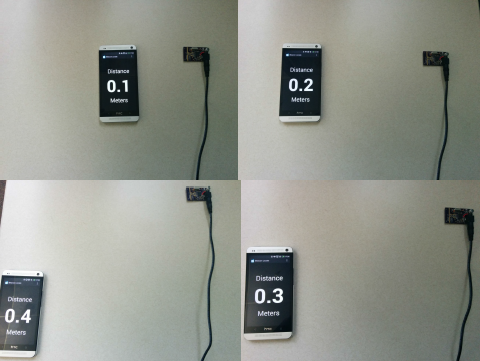
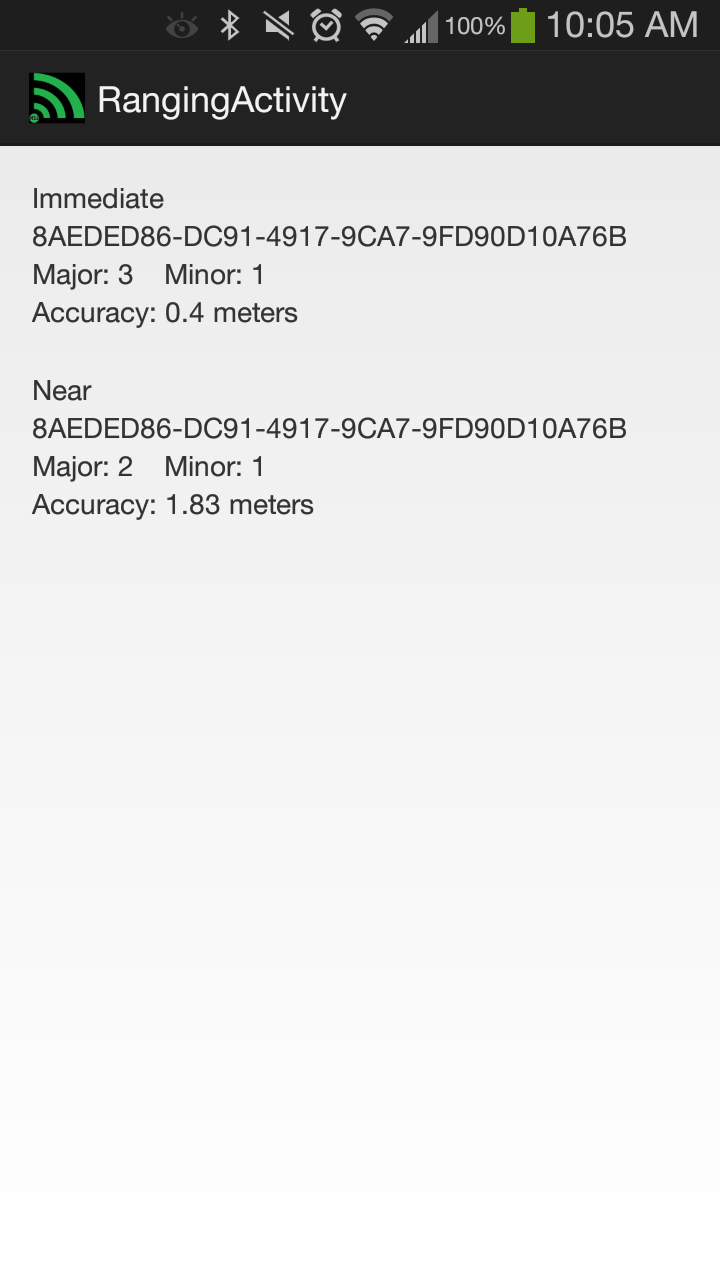
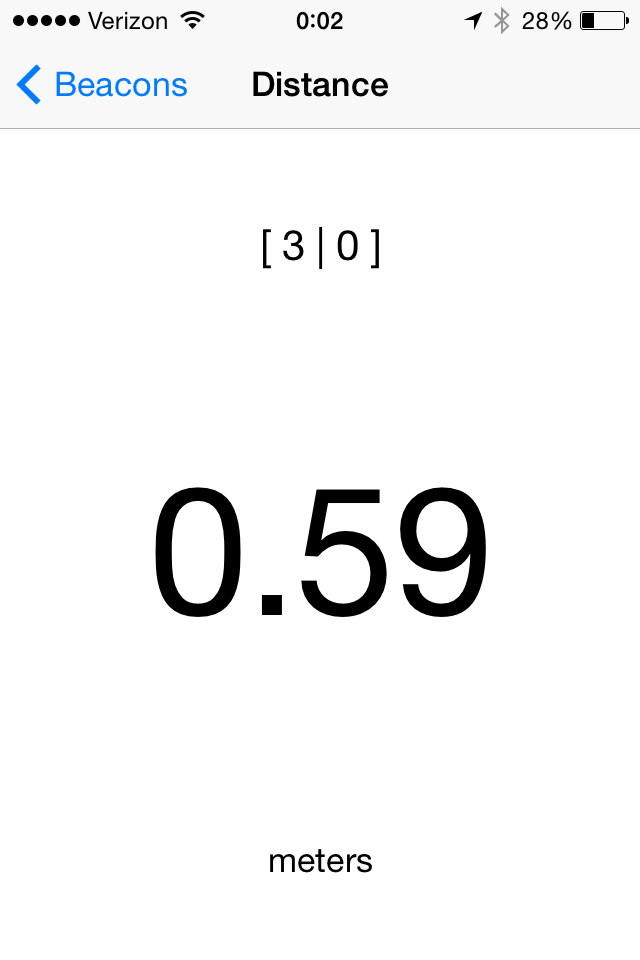
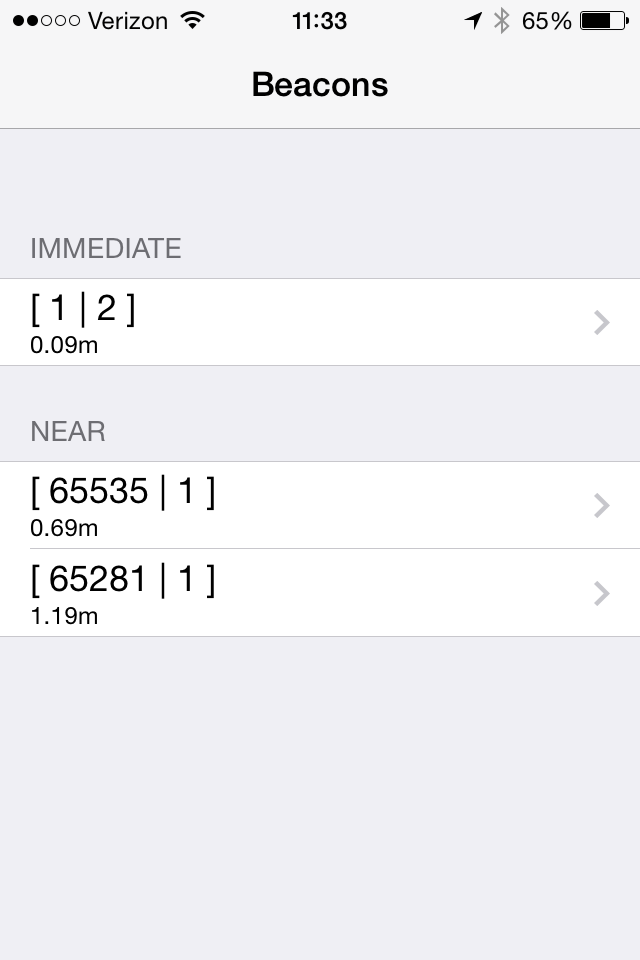
- Software Demonstration
-
-
-
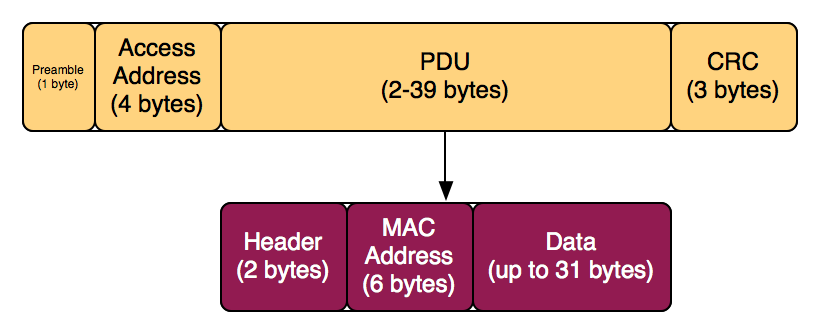
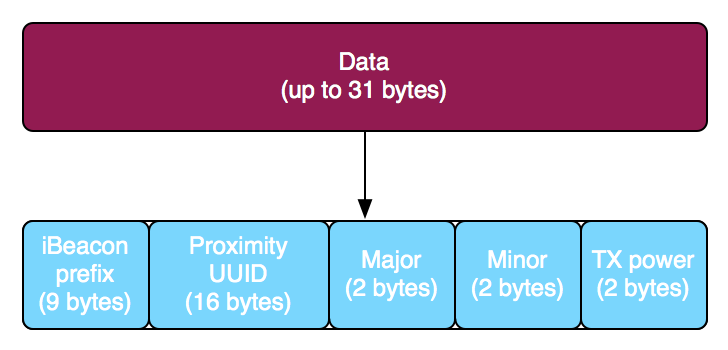
Bluetooth Packet Breakdown
- Preamble: Either 10101010 or 01010101
- Access Address: Fixd for advertising packets
- Protocal Data Unit (PDU):
- iBeacon prefix: Fixed value
- UUID/Major/Minor bits: Used to identify individual beacons
- Tx Power: Used to calculate distance to beacons
- CRC: Cyclic Redundancy Check
Budget
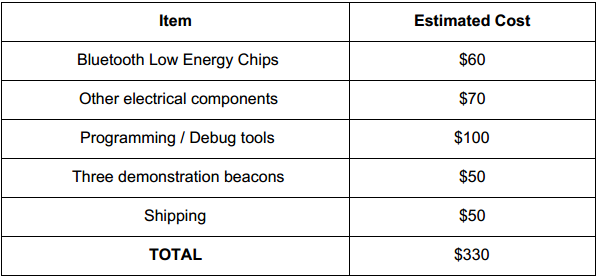
Projected Budget
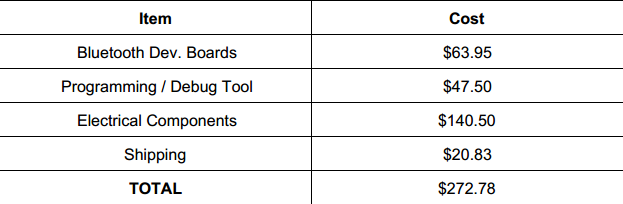
Final Budget
-
-
In total, after developing two prototypes and the final design, the final cost of the project
was $272.78. The proposed cost of the project was $330, therefore the project was
completed $60 under budget. The actual cost of the final design is $16.45. It fits in the price
range given by the sponsor RCPD and If the beacons were used on a large scale
throughout campus the price per unit of the beacon would go down due to the discounted
prices of components ordered in bulk. The price per unit for constructing 500 beacons
would be $9.92, which meets the design objective better.
Project Summary and Future Improvements
-
Overall, the project is a success since all of the design specifications were achieved. The
cost per beacon is well under $20 and the beacon allows for reusability of the code and
design by the RCPD for future developments. The beacon performs well enough for it
designed purposes however the accuracy of the distance from beacon to receiver was not
as stable as expected.
Even with success, there are still areas of improvement that can be made on the beacon.
Improvements can be done on the PCB layout for the components.There are four layouts
for capacitors that need to be added on the PCB layout to allow the beacon to properly
function. In addition, the polarity layout for the DC jack needs to be reversed. The team was
able to fix these layout errors by soldering components over the PCB but future revisions
should fix the errors on the actual PCB layouts. For future iterations, the beacon can be
design to be battery powered.
In regards to software, a database needs to be implemented in order to match the UUID,
major byte and minor byte to a name for a precise location. More accurate averaging
algorithm is needed for the Android side to further increase the distance measured from
the beacons and triangulation could be added to improve it even more. On the firmware
side, it may be possible to update the firmware remotely and prevent tampering at the
same time using OAD method, but it requires more work on the encryption of the firmware
on both ends.
-
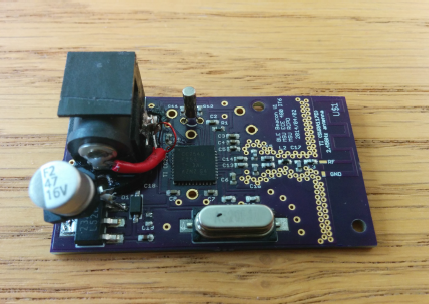
Final Design Circuit